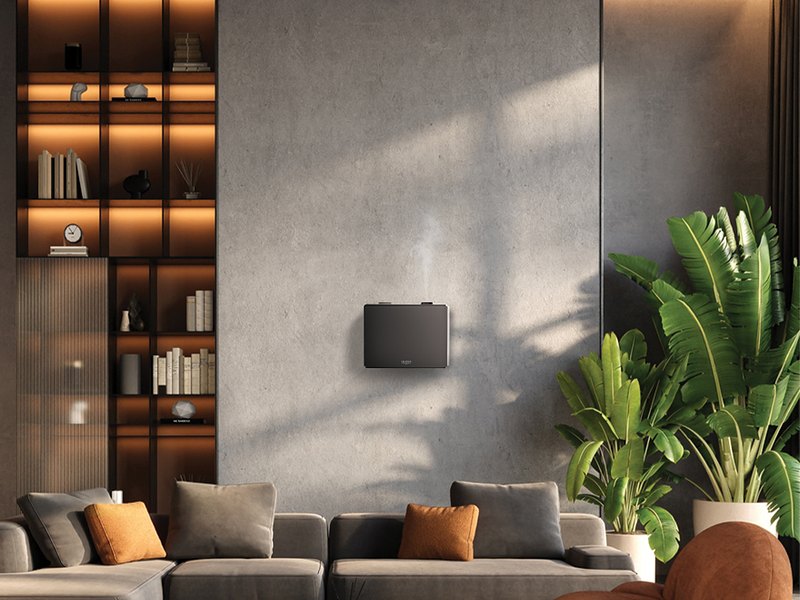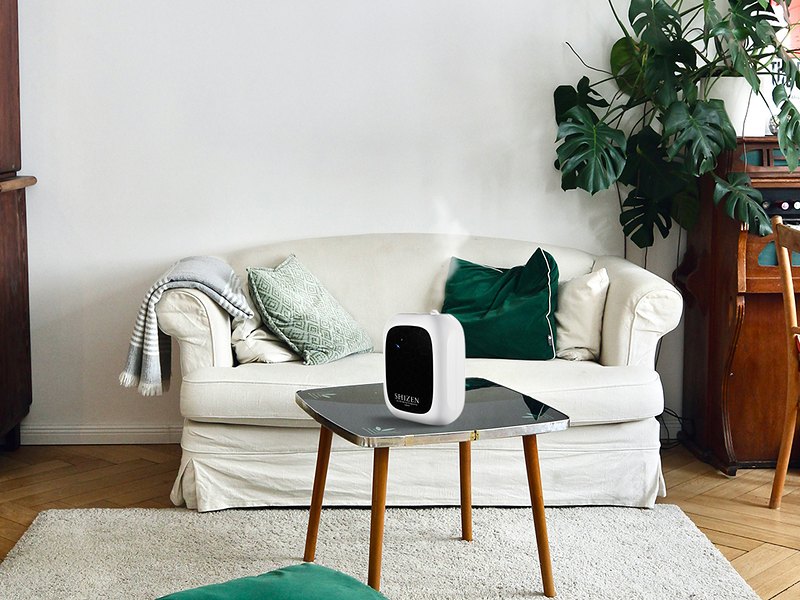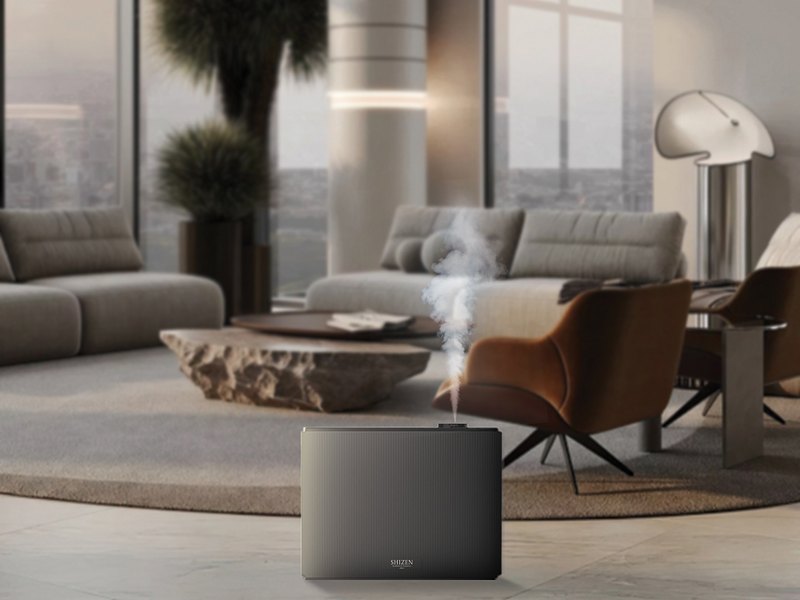

In June 2025 Nikkei wrote that products and services that “colour shared spaces with scent” were drawing attention in Japan.1 Two of its examples come from large companies not usually associated with hotels or offices: S.T., the household-freshener maker, will ship deodorising fragrance for hotel rooms — a cumulative 300,000 rooms by 2028; and Rohto, a pharmaceutical company, sells aroma diffusers for offices. Both are selling the same thing — not a smell, but the feeling that a place is looked after.
The 15th floorRelaxed, but still able to concentrate.
The report opens at the Shinjuku head office of Misawa Homes, a housing developer. Step into a room on the 15th floor and a faint citrus hangs in the air. “We wanted a place where people can relax yet still concentrate,” says Miyako Uemura, who worked on the floor’s design.1
Those two things — faint, and a clear purpose — are the whole lesson. Scent in a workplace is not meant to be smelt; it is meant to go unnoticed, until people go home and realise the day felt lighter.
A place where people relax — but can still concentrate.From households to hotels and offices
Two big companies, two ways in.
S.T. came in through hotels: deodorising fragrance products for guest rooms, with a cumulative target of 300,000 rooms by 2028.1 Rohto came in through offices, with diffusers from its scent laboratory BÉLAIR LAB, on sale since 2021.4
The most telling example may be S.T. itself. The company created its own corporate fragrance — from more than 34,000 words of employee and partner interviews, three candidates, then a company-wide vote — and uses it at the entrance of its head office and on the business cards it hands to clients.3 A fragrance company scenting its own space: a sign that this is taken seriously.
A small market, growingThe numbers from Japan’s aroma association.
How big is it? The Aroma Environment Association of Japan (AEAJ) puts Japan’s space-scenting services market at 2.3 billion yen in 2024 — up 6% on 2021 — inside a 419.3 billion yen market for scented products.2 Small next to household fresheners, but moving up, and the players are now large companies. In Indonesia we see the same pattern two or three years behind: from hotels, to showrooms and clinics, then to offices.