Twenty office workers were tired out with 45 minutes of data work, then given 90 seconds of scent. Citrus brought concentration and vigour back fastest. Floral eased tense muscles most. Forest scents lowered the feeling of being pressed for time most. All helped, but not with the same thing.
Written by the Shizen teamSource: Buildings (MDPI), vol. 16, no. 1, article 3 — published 19 December 2025All Insight articlesOriginal article in English. Also available in Bahasa Indonesia and Japanese.
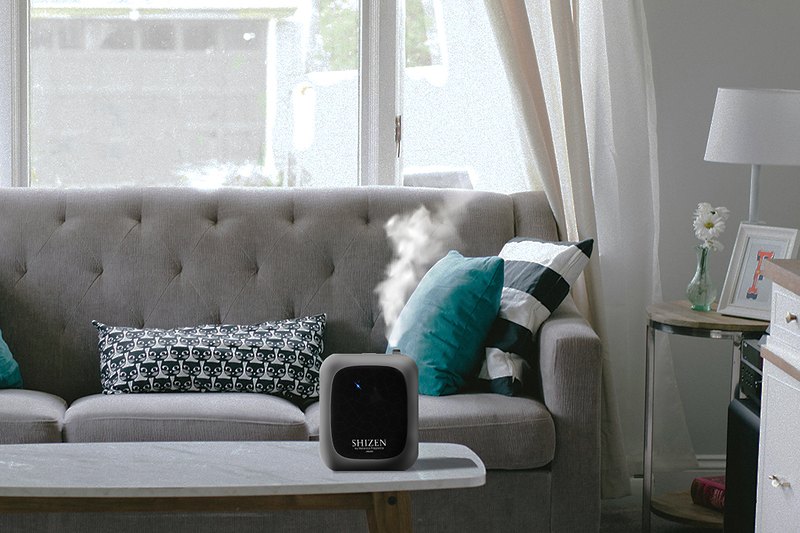
A Shizen SBX1 in a rest area. In this study, 90 seconds of scent were enough to change participants’ heart rate, muscles and working speed. Image: Shizen.
20office workers testedaged 25–30, half women
90seconds of scent exposureafter 45 minutes of data work
3scent families: fruity, floral, forestsix scents, two per family
The question we hear most often from offices: “which scent makes people focus?” A study published in the journal Buildings at the end of 2025 — a collaboration between Nanjing Forestry University and Nottingham Trent University — gives a more useful answer than one fragrance name: it depends on which tiredness.1 The researchers made office workers genuinely tired, then measured body and brain after 90 seconds of scent from three families: fruity, floral and forest.
The experiment
Tired first, then scent.
Twenty office workers aged 25–30 — ten men, ten women — did 45 minutes of data-classification work with an accuracy demand above 95%. A fatigue questionnaire confirmed they were tired on every dimension. Each then breathed a scent for 90 seconds: jasmine or lavender (floral), lemon or orange (fruity), tea tree or cedarwood (forest), all at 10% concentration, against a no-scent control.
What was measured was not only feeling. The researchers recorded brain waves (EEG), heart-rate variability, shoulder-muscle tension (EMG), pupil diameter, the time taken to complete the next task, and three questionnaires on workload and mood.1
The results
Three scents, three kinds of recovery.
Fruity scents — lemon and orange — did most for psychological fatigue and cognitive ability: participants finished the next task fastest, reported the lowest mental pressure and the highest vigour. Floral scents — jasmine and lavender — did most for physiological fatigue: shoulder-muscle tension fell the most. Forest scents — tea tree and cedarwood — lowered “time load” most, the feeling of being pressed for time.1
A rest area is where floral scent makes most sense: the study recorded more relaxed muscles after jasmine and lavender. Image: Shizen.
The authors’ conclusion: all three scent interventions “to some extent alleviated employee fatigue and improved cognitive abilities”, each with different benefits — and they suggest choosing the scent for the kind of fatigue a given office space is meant to recover.
Mental tiredness and physical tiredness recover with different scents.
A note
What it does not answer.
This is a laboratory study with 20 participants who completed the full set (of 40 recruited), a single measurement, and 90 seconds of exposure — not a working day. The authors note those limits themselves. The result is a direction, not a prescription. But the direction matches what we see on site: a work floor and a rest area should not run the same scent.
What it means for your space
Which scent for which room.
1
Citrus for the work floor.
Open-plan floors, meeting rooms, service desks — where people must think and be pleasant at the same time. In Shizen’s catalogue, the citrus and green-tea families are our first choice for rooms like these.
2
Floral for rest areas.
Pantry, rest room, prayer room, nursing room: where people come to let go of tension. A soft floral, not a sweet one.
3
Forest for waiting rooms and lobbies.
Where people wait — patients, visitors, applicants — is where the feeling of being pressed for time is strongest. Wood and forest scents lower it. We trial two or three scents in your space before deciding.
How Shizen does it
A Japanese brand, rented monthly.
Shizen is a Japanese brand — by Botanica Fragrance Japan — with more than 100 fragrances, including a series inspired by five-star hotels. The system is rented monthly: machine, installation, fragrance oil, regular servicing and unit replacement included, minimum contract 12 months. A free site survey, no commitment.
Plan prices as of September 2026. All six plans, up to 2,000 m², are on the home page.
Sources and notes
Where these figures come from.
Mizhi Feng, Chengmin Zhou, Fangfang Yuan (Nanjing Forestry University) and Jake Kaner (Nottingham Trent University), Buildings (MDPI), vol. 16, no. 1, article 3. Open-access study; the figures and quotes in this article are taken from the paper, not from Shizen’s own measurements.
Shizen is not affiliated with the companies, media or researchers named in this article; they are cited as sources.
The effect of a scent on a space depends on the room, the intensity and the fragrance chosen. That is why we always start with a site survey and a trial of two or three scents.
Dua puluh pekerja kantor dibuat lelah dengan 45 menit pekerjaan data, lalu diberi 90 detik aroma. Sitrus mengembalikan konsentrasi dan semangat paling cepat. Floral paling meredakan otot yang tegang. Aroma hutan paling menurunkan rasa diburu waktu. Semuanya membantu, tetapi tidak untuk hal yang sama.
Ditulis oleh tim ShizenSumber: Buildings (MDPI), vol. 16, no. 1, artikel 3 — terbit 19 Desember 2025Semua artikel InsightTerjemahan Bahasa Indonesia oleh tim Shizen dari artikel asli berbahasa Inggris.
Shizen SBX1 di ruang istirahat. Dalam studi ini, 90 detik aroma sudah cukup untuk mengubah detak jantung, otot dan kecepatan kerja peserta. Visual: Shizen.
20pekerja kantor diujiusia 25–30, separuh perempuan
90detik paparan aromasetelah 45 menit pekerjaan data
3keluarga aroma: buah, bunga, hutanenam aroma, dua per keluarga
Pertanyaan yang paling sering kami dengar dari kantor: “aroma apa yang bikin orang fokus?” Sebuah studi yang terbit di jurnal Buildings pada akhir 2025 — kerja sama Universitas Kehutanan Nanjing dan Universitas Nottingham Trent — memberi jawaban yang lebih berguna daripada satu nama aroma: tergantung lelah yang mana.1 Para peneliti membuat pekerja kantor lelah secara sungguhan, lalu mengukur tubuh dan otaknya setelah 90 detik menghirup aroma dari tiga keluarga: buah, bunga, dan hutan.
Percobaannya
Lelah dulu, baru aroma.
Dua puluh pekerja kantor berusia 25–30 tahun — sepuluh laki-laki, sepuluh perempuan — mengerjakan 45 menit tugas klasifikasi data dengan tuntutan ketelitian di atas 95%. Kuesioner kelelahan menegaskan mereka benar-benar lelah di semua dimensi. Lalu masing-masing menghirup aroma selama 90 detik: melati atau lavender (bunga), lemon atau jeruk (buah), tea tree atau cedarwood (hutan), semuanya pada konsentrasi 10%, dibandingkan dengan tanpa aroma.
Yang diukur bukan hanya perasaan. Peneliti merekam gelombang otak (EEG), variabilitas detak jantung, ketegangan otot bahu (EMG), diameter pupil, waktu menyelesaikan tugas berikutnya, dan tiga kuesioner beban kerja dan suasana hati.1
Hasilnya
Tiga aroma, tiga jenis pemulihan.
Aroma buah — lemon dan jeruk — paling kuat memulihkan kelelahan psikologis dan kemampuan kognitif: peserta menyelesaikan tugas berikutnya paling cepat, melaporkan tekanan mental paling rendah, dan semangat paling tinggi. Aroma bunga — melati dan lavender — paling kuat memulihkan kelelahan fisiologis: ketegangan otot bahu turun paling banyak. Aroma hutan — tea tree dan cedarwood — paling menurunkan “beban waktu”, yaitu rasa diburu oleh waktu.1
Ruang istirahat adalah tempat aroma floral paling masuk akal: studi ini mencatat otot yang lebih rileks setelah melati dan lavender. Visual: Shizen.
Kesimpulan para penulis: ketiga intervensi aroma “sampai taraf tertentu meringankan kelelahan karyawan dan meningkatkan kemampuan kognitif”, dengan manfaat yang berbeda-beda — dan mereka menyarankan pemilihan aroma sesuai jenis kelelahan yang ingin dipulihkan di sebuah ruang kantor.
Lelah pikiran dan lelah badan ternyata pulih dengan aroma yang berbeda.
Catatan
Apa yang belum dijawab.
Ini studi laboratorium dengan 20 peserta yang menyelesaikan seluruh rangkaian (dari 40 yang direkrut), satu kali pengukuran, dan paparan 90 detik — bukan seharian. Penulisnya sendiri mencatat batasan-batasan itu. Hasilnya adalah arah, bukan resep. Tetapi arahnya cocok dengan yang kami lihat di lapangan: ruang kerja dan ruang istirahat sebaiknya tidak memakai aroma yang sama.
Apa artinya untuk ruang Anda
Aroma yang mana untuk ruang yang mana.
1
Sitrus untuk lantai kerja.
Ruang kerja terbuka, ruang rapat, meja layanan — tempat orang harus berpikir dan ramah pada saat yang sama. Di katalog Shizen, keluarga sitrus dan teh hijau adalah pilihan pertama kami untuk ruang seperti ini.
2
Floral untuk ruang istirahat.
Pantry, ruang istirahat, musala, ruang menyusui: tempat orang datang untuk melepas tegang. Aroma bunga yang lembut, bukan yang manis.
3
Hutan untuk ruang tunggu dan lobi.
Tempat orang menunggu — pasien, tamu, pelamar — adalah tempat rasa diburu waktu paling terasa. Aroma kayu dan hutan menurunkannya. Kami uji dua–tiga aroma di ruang Anda sebelum memutuskan.
Bagaimana Shizen mengerjakannya
Merek Jepang, disewa bulanan.
Shizen adalah merek Jepang — by Botanica Fragrance Japan — dengan lebih dari 100 aroma, termasuk seri yang terinspirasi hotel bintang lima. Sistemnya disewa bulanan: mesin, instalasi, fragrance oil, perawatan berkala dan penggantian unit termasuk, kontrak minimum 12 bulan. Survei ruang gratis, tanpa komitmen.
Harga paket per September 2026. Enam paket lengkap, sampai 2.000 m², ada di halaman utama.
Sumber dan catatan
Dari mana angka-angka ini.
Mizhi Feng, Chengmin Zhou, Fangfang Yuan (Universitas Kehutanan Nanjing) dan Jake Kaner (Universitas Nottingham Trent), Buildings (MDPI), vol. 16, no. 1, article 3. Studi akses terbuka; angka dan kutipan di artikel ini diambil dari makalah tersebut, bukan hasil pengukuran Shizen.
Shizen tidak berafiliasi dengan perusahaan, media atau peneliti yang disebut di artikel ini; mereka disebut sebagai sumber.
Efek aroma pada suasana ruang bergantung pada ruang, intensitas dan aroma yang dipilih. Karena itu kami selalu mulai dengan survei ruang dan uji dua–tiga aroma.