Insight5 min read

Three kinds of tired, three scents.

Twenty office workers were tired out with 45 minutes of data work, then given 90 seconds of scent. Citrus brought concentration and vigour back fastest. Floral eased tense muscles most. Forest scents lowered the feeling of being pressed for time most. All helped, but not with the same thing.

Written by the Shizen teamSource: Buildings (MDPI), vol. 16, no. 1, article 3 — published 19 December 2025All Insight articlesOriginal article in English. Also available in Bahasa Indonesia and Japanese.
Shizen SBX1 on a small table in front of a white sofa with green cushions
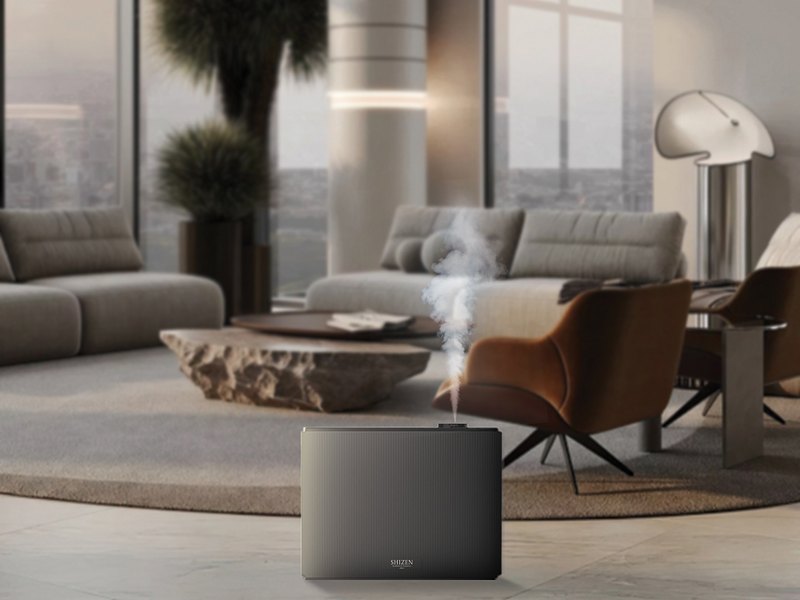
A Shizen SBX1 in a rest area. In this study, 90 seconds of scent were enough to change participants’ heart rate, muscles and working speed. Image: Shizen.
20office workers testedaged 25–30, half women
90seconds of scent exposureafter 45 minutes of data work
3scent families: fruity, floral, forestsix scents, two per family

The question we hear most often from offices: “which scent makes people focus?” A study published in the journal Buildings at the end of 2025 — a collaboration between Nanjing Forestry University and Nottingham Trent University — gives a more useful answer than one fragrance name: it depends on which tiredness.1 The researchers made office workers genuinely tired, then measured body and brain after 90 seconds of scent from three families: fruity, floral and forest.

The experiment

Tired first, then scent.

Twenty office workers aged 25–30 — ten men, ten women — did 45 minutes of data-classification work with an accuracy demand above 95%. A fatigue questionnaire confirmed they were tired on every dimension. Each then breathed a scent for 90 seconds: jasmine or lavender (floral), lemon or orange (fruity), tea tree or cedarwood (forest), all at 10% concentration, against a no-scent control.

What was measured was not only feeling. The researchers recorded brain waves (EEG), heart-rate variability, shoulder-muscle tension (EMG), pupil diameter, the time taken to complete the next task, and three questionnaires on workload and mood.1

The results

Three scents, three kinds of recovery.

Fruity scents — lemon and orange — did most for psychological fatigue and cognitive ability: participants finished the next task fastest, reported the lowest mental pressure and the highest vigour. Floral scents — jasmine and lavender — did most for physiological fatigue: shoulder-muscle tension fell the most. Forest scents — tea tree and cedarwood — lowered “time load” most, the feeling of being pressed for time.1
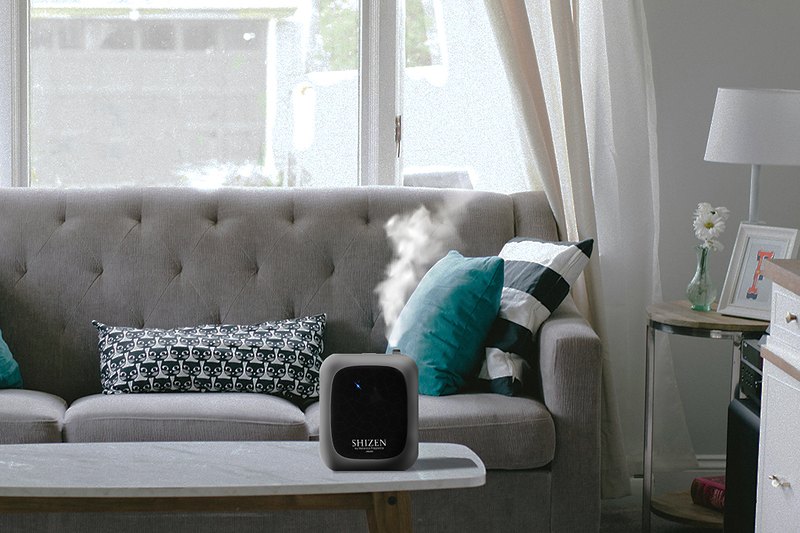
Shizen SBX1 on a table in front of a grey sofa by a window
A rest area is where floral scent makes most sense: the study recorded more relaxed muscles after jasmine and lavender. Image: Shizen.

The authors’ conclusion: all three scent interventions “to some extent alleviated employee fatigue and improved cognitive abilities”, each with different benefits — and they suggest choosing the scent for the kind of fatigue a given office space is meant to recover.

Mental tiredness and physical tiredness recover with different scents.
A note

What it does not answer.

This is a laboratory study with 20 participants who completed the full set (of 40 recruited), a single measurement, and 90 seconds of exposure — not a working day. The authors note those limits themselves. The result is a direction, not a prescription. But the direction matches what we see on site: a work floor and a rest area should not run the same scent.

What it means for your space

Which scent for which room.

1

Citrus for the work floor.

Open-plan floors, meeting rooms, service desks — where people must think and be pleasant at the same time. In Shizen’s catalogue, the citrus and green-tea families are our first choice for rooms like these.

2

Floral for rest areas.

Pantry, rest room, prayer room, nursing room: where people come to let go of tension. A soft floral, not a sweet one.

3

Forest for waiting rooms and lobbies.

Where people wait — patients, visitors, applicants — is where the feeling of being pressed for time is strongest. Wood and forest scents lower it. We trial two or three scents in your space before deciding.

How Shizen does it

A Japanese brand, rented monthly.

Shizen is a Japanese brand — by Botanica Fragrance Japan — with more than 100 fragrances, including a series inspired by five-star hotels. The system is rented monthly: machine, installation, fragrance oil, regular servicing and unit replacement included, minimum contract 12 months. A free site survey, no commitment.

Portable · SBX115–30 m²Rp597,000 / monthboutiques, clinics, meeting rooms, reception desks
Cozy · SBA181–200 m²Rp998,000 / monthrestaurants, showrooms, retail floors, gyms
Prestige · SBA2201–300 m²Rp1,186,000 / monthhotel lobbies, executive offices, flagship boutiques

Plan prices as of September 2026. All six plans, up to 2,000 m², are on the home page.

Shizen SBA2
Sources and notes

Where these figures come from.

  1. Mizhi Feng, Chengmin Zhou, Fangfang Yuan (Nanjing Forestry University) and Jake Kaner (Nottingham Trent University), Buildings (MDPI), vol. 16, no. 1, article 3. Open-access study; the figures and quotes in this article are taken from the paper, not from Shizen’s own measurements.
  2. Shizen is not affiliated with the companies, media or researchers named in this article; they are cited as sources.
  3. The effect of a scent on a space depends on the room, the intensity and the fragrance chosen. That is why we always start with a site survey and a trial of two or three scents.