
In September 2026 Nikkei reported a new movement in Japan: scent technology used to improve working environments.1 S.T., the freshener maker, is installing deodorising sheets at livestock sites; makers of aroma products are helping offices raise productivity. And the aim the report names is no longer “to smell nice” but to make people comfortable at work — so that companies find it easier to recruit and keep employees.
A poultry house in MiyazakiIf a farm invests in air, an office can.
The report opens at a poultry farm in Miyazaki that raises about 40,000 broilers. Inside the sheds, fans circulate the air, and brown sheets line the ceiling and walls — deodorising sheets developed by S.T. together with Toray.1 A few months earlier, in May 2026, S.T. and Miyazaki City had signed an agreement to trial odour control at farms, composting facilities and the city zoo, using an extract of Hokkaido fir named ClearForest.2
Why would a farm pay for air? Because the work is hard, and smell is the most common reason people refuse to work in such places. Better air is a workplace facility — like air-conditioning — and the Nikkei report puts it exactly there: a tool for recruiting and keeping people.
Good air is a workplace facility — the same as air-conditioning.From the farm to the office
Productivity first, then retention.
At the other end, the same report names makers of aroma products helping offices raise productivity.1 The logic runs in one line from the farm. In a country short of workers, companies compete not only on pay but on how it feels to spend eight hours a day in a place — and air is the part of that feeling most often ignored.
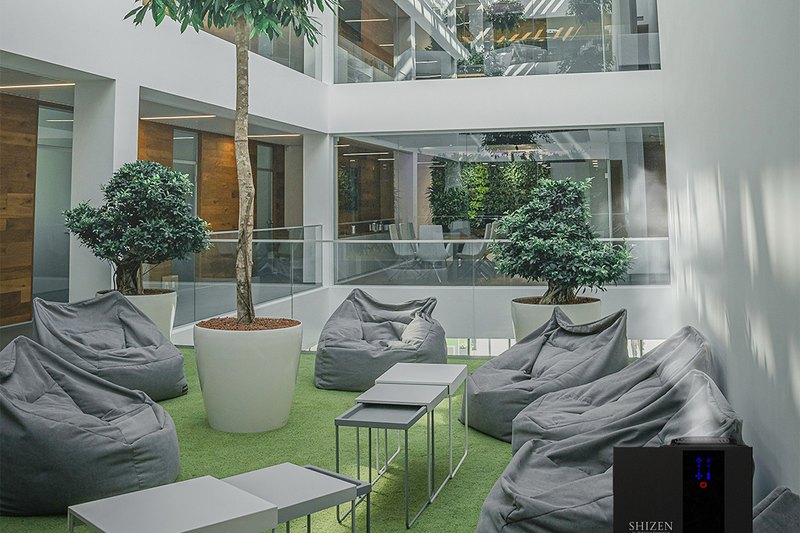
The interesting part is that this is no longer a facilities matter. Once the reason becomes “recruitment and retention”, scent moves to HR’s desk. That is the shift the report records.
What it means in IndonesiaStart with the rooms staff use, not only visitors.
In Indonesia, scenting is usually installed for visitors: lobby, showroom, waiting room. But the rooms that decide whether people stay are the ones they use every day — the open-plan floor, the pantry, the lift lobby, the rest room, and the workshop or warehouse attached to the showroom. That is where a bad smell is left for years, and where a candidate forms a first impression at the interview.