
Promotool is not a boutique. The Tokyo scent-technology company designs fragrances for airlines (JAL among them), hotels, cosmetics companies, property developers and local governments, and in August 2026 its scent-space design sales rose 13.9% on the year before.2 Every year its laboratory, the Scent Technology Research Institute in Saitama, publishes one forecast: the scent of the coming year. For 2025 it chose white tea and thyme, for 2026 Earl Grey and thyme. On 28 October 2026, for the fourth year running, it announced the scent of 2027: Hinoki & Thyme.1
Why hinokiFrom something people like to a way of shaping time and space.
The reason, the release says, is a shift in what people expect from a scent. Interest in forest bathing and wellbeing is growing, and a scent is now asked not just to be liked but to make time and space feel comfortable while keeping nature close.1 Hinoki was chosen because it is familiar to Japanese people and brings back, at once, the freshness of a forest and the warmth of wood: not a woody note so much as the experience of walking among trees.1
The research is rooted in one place: the Akasawa natural recreation forest in Agematsu, Nagano Prefecture, known as the birthplace of forest bathing. Under the guidance of Professor Li Qing, the company’s adviser and a leading forest-bathing researcher, master perfumer Takeshi Watanabe and fragrance analyst Shizue Nishino studied the Kiso hinoki that grows there.1 The 2027 blend layers Kiso hinoki and Aomori hiba with thyme, Scots pine and olibanum: a fresh opening, a move into wood, and a calm, lingering finish.1
The warmth of hinoki wood layered with the herbal freshness of thyme: a way to express a connection with nature, and the comfort of time spent wrapped in scent — Takeshi Watanabe.Who it is for
Hotels, ryokan, spas and offices first.
Promotool names hotels and ryokan, spas and bathhouses, wellness facilities, offices and homes as the places for the 2027 scent, with products to follow: room sprays, home fragrance, hotel amenities and body care.1 The pattern matches what we see in Indonesia. Woody-green scents are chosen by rooms that want to feel calm and clean without smelling of cleaning fluid: lobbies, spas, clinics, waiting areas.

What is worth noting about the Japanese way is the order of things: research in the forest first, then the blend, then a forecast published every year so that hotels and property owners move together. Scent trends in Japan rarely come from fashion. They come from a laboratory, and from what hotel and office managers ask for.
In the Shizen collectionCypress, cedar, pine and fir are already on our shelf.
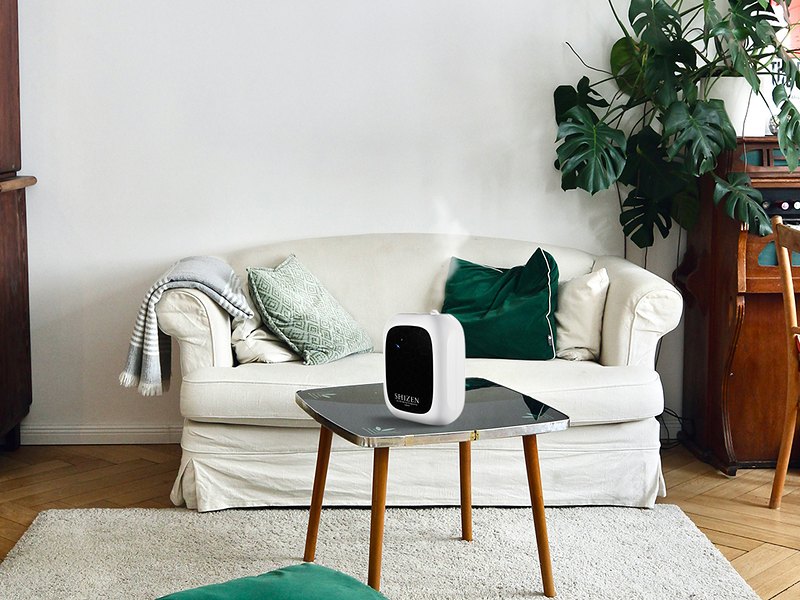
Hinoki is the Japanese cypress. In the Shizen collection the wood and forest family — cypress, cedar, pine, fir, green bamboo — runs through a number of fragrances, and some of them are the ones lobbies and spas ask for most.3 We do not make a copy of “Hinoki & Thyme”. What we do is bring two or three woody-green fragrances to your space during the site survey, because a scent changes character with the materials and temperature of the room.