Kantor Tanseisha di Shinagawa punya tiga bilik fokus dan dua bilik relaksasi. Dua minggu dipakai tanpa aroma, empat minggu dengan aroma sitrus dan kayu, dan pemakaiannya dihitung sensor. Satu bilik fokus naik 40% dan sesi 60–120 menit yang sebelumnya tidak ada mulai muncul. Satu bilik lain turun. Perusahaannya sendiri menyebut ini verifikasi awal.
Ditulis oleh tim ShizenSumber: KaleidoPath (rilis pers), 29 September 2026Semua artikel InsightTerjemahan Bahasa Indonesia oleh tim Shizen dari artikel asli berbahasa Jepang.
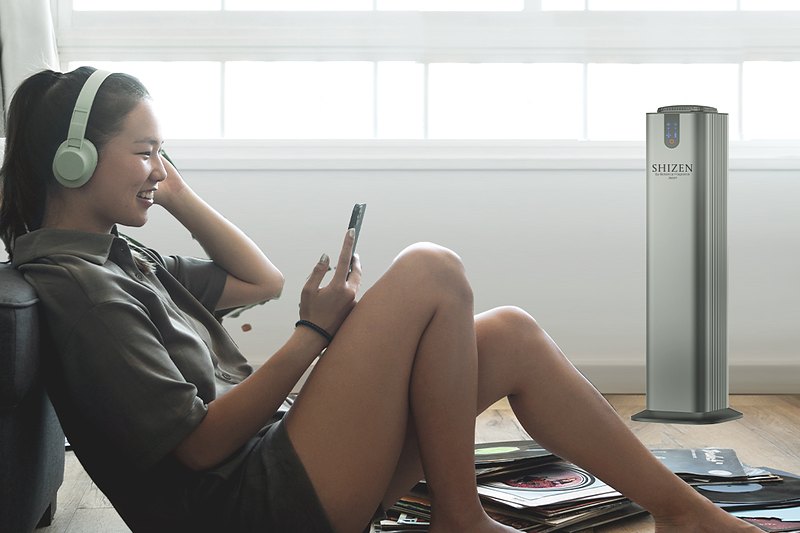
Shizen SBX1 di sebuah sudut istirahat. Ruang kecil dengan satu tujuan yang jelas adalah tempat termudah untuk menguji aroma dan mengukur hasilnya. Visual: Shizen.
+40%pemakaian bilik fokus beraroma10 → 14 sesi, bilik fokus ③
21 → 29 menitrata-rata di bilik relaksasi beraromabilik relaksasi ②; sesi 60 menit ke atas bertambah
+53,2 poinekspektasi produktivitas setelah istirahatskala −100 sampai +100; penilaian subjektif
Tanseisha adalah perusahaan desain ruang terkemuka di Jepang, dan kantornya di Shinagawa, Tokyo, dipakai sebagai laboratorium. Dari 1 sampai 14 April 2026, tiga bilik fokus dan dua bilik relaksasinya dipakai seperti biasa, tanpa aroma. Dari 15 April sampai 12 Mei, dua bilik fokus dan dua bilik relaksasi diberi aroma, sitrus untuk menyegarkan dan kayu untuk melepas lelah, yang dipilih dan dirancang KaleidoPath, studio desain aroma di Tokyo. Satu bilik fokus sengaja dibiarkan tanpa aroma sebagai pembanding.1 Yang membedakan percobaan ini dari testimoni biasa: pemakaian tidak ditanyakan, melainkan dihitung sensor inframerah dari layanan analisis ruang COCOSTAT milik Tanseisha, pada hari kerja pukul 07.00–19.00.1
Hasilnya tidak seragam
Satu bilik naik 40%, satu bilik lain turun.
Bilik fokus ③ yang diberi aroma dipakai 14 kali dalam periode beraroma, dari 10 kali sebelumnya: naik 40%. Yang lebih menarik, sesi panjang muncul di bilik itu: pemakaian 30–60 menit dari 0 menjadi 2, dan 60–120 menit dari 0 menjadi 4.1 Tetapi bilik fokus ② yang juga beraroma justru turun, 44 → 39 pemakaian dan rata-rata 21 → 15 menit, dan bilik pembanding tanpa aroma ikut turun, 25 → 22.1 Di bilik relaksasi, bilik ② memanjang dari rata-rata 21 ke 29 menit dengan lebih banyak sesi 60 menit ke atas, sementara bilik ① sedikit memendek.1
KaleidoPath menulis sendiri bahwa ini verifikasi awal dengan jumlah sampel terbatas, dan hasilnya akan dikonfirmasi lewat percobaan berikutnya.1 Kami kutip apa adanya, karena justru itu yang membuat laporannya layak dibaca: angka naik dan angka turun ditampilkan berdampingan.
Sesi 60–120 menit di bilik fokus beraroma: dari nol menjadi empat.
Yang layak dipercaya
Bukan angka 40%-nya, melainkan caranya.
Ada empat hal yang patut ditiru dari rancangan percobaan ini. Ada periode pembanding sebelum aroma dipasang. Ada satu bilik yang dibiarkan tanpa aroma. Pemakaian diukur sensor, dengan definisi yang jelas: deteksi terus-menerus dihitung satu sesi, jeda lebih dari 10 menit dihitung sesi baru. Dan aroma dirancang dengan konsentrasi yang “menyatu wajar dengan ruang”, dengan pilihan untuk tidak memakainya.1 Kuesioner dipakai hanya untuk hal yang memang subjektif: kekuatan aroma dan harapan pengguna tentang produktivitasnya setelah beristirahat, rata-rata +53,2 poin pada skala −100 sampai +100 di bilik relaksasi, dan setiap area paling sedikit +40. Perusahaannya menegaskan ini harapan, bukan produktivitas terukur.1
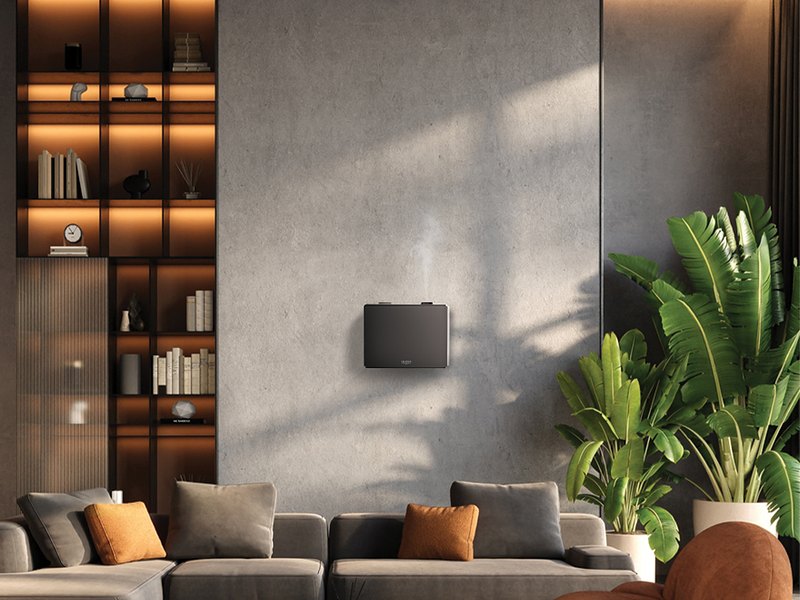
Shizen SBA2 di sudut istirahat. Di percobaan Tanseisha, bilik relaksasi beraroma kayu dipakai lebih lama: dari rata-rata 21 menit menjadi 29. Visual: Shizen.
Dua pilihan aromanya juga bercerita. Sitrus untuk bilik yang mengejar kesegaran dan fokus, kayu untuk bilik yang mengejar lepas lelah. Itu sejalan dengan dua tulisan kami sebelumnya: aroma yang berbeda membantu lelah yang berbeda, dan aroma hanya bekerja kalau orangnya menyukainya. Pilihan tanpa aroma yang tetap disediakan adalah cara paling sederhana menghormati yang kedua.
Untuk kantor di Indonesia
Mulai dari ruang kecil, lalu ukur.
Kantor-kantor di Jakarta kini juga membangun bilik telepon, ruang fokus dan sudut tenang. Ruang-ruang itu adalah tempat termudah untuk mencoba aroma: volumenya kecil, tujuannya jelas, dan pemakaiannya bisa dihitung dari sistem pemesanan ruang atau sensor yang sudah ada. Tanseisha butuh dua minggu tanpa dan empat minggu dengan aroma untuk mendapat angka yang bisa dibaca. Itu ukuran percobaan yang masuk akal untuk kantor mana pun.
Apa artinya untuk ruang Anda
Untuk kantor dan coworking di Indonesia.
1
Mulai dari bilik fokus atau ruang tenang, bukan seluruh lantai.
Ruang 5–30 m² dengan satu tujuan adalah tempat uji terbaik. Satu unit kecil seperti SBX1 pada intensitas rendah cukup untuk bilik, ruang rapat kecil dan sudut istirahat; jadwalnya diatur per jam supaya aroma hadir saat ruang dipakai.
2
Dua minggu tanpa, empat minggu dengan.
Catat pemakaian dari sistem pemesanan ruang atau sensor yang sudah ada, lalu bandingkan. Hitung sesi dan durasinya, bukan kesan. Kalau angkanya campur seperti di Tanseisha, itu informasi, bukan kegagalan: pindahkan aroma, atau ganti aromanya.
3
Sediakan pilihan tanpa aroma.
Tanseisha membiarkan satu bilik tanpa aroma. Lakukan hal yang sama. Preferensi orang berbeda, dan survei ruang plus uji dua–tiga aroma Shizen ada justru untuk menemukan aroma yang disukai pengguna ruang itu, bukan pengelolanya.
Bagaimana Shizen mengerjakannya
Merek Jepang, disewa bulanan.
Shizen adalah merek Jepang — by Botanica Fragrance Japan — dengan lebih dari 100 aroma, termasuk seri yang terinspirasi hotel bintang lima. Sistemnya disewa bulanan: mesin, instalasi, fragrance oil, perawatan berkala dan penggantian unit termasuk, kontrak minimum 12 bulan. Survei ruang gratis, tanpa komitmen.
Harga paket per September 2026. Enam paket lengkap, sampai 2.000 m², ada di halaman utama.
Sumber dan catatan
Dari mana angka-angka ini.
KaleidoPath Inc. (PR TIMES), 29 September 2026: rancangan percobaan (periode, tempat, area, aroma, definisi sesi, jam pengukuran), seluruh angka pemakaian bilik fokus dan bilik relaksasi, hasil kuesioner, dan catatan perusahaan bahwa percobaan ini verifikasi awal dengan sampel terbatas. Tanseisha disebut sebagai mitra yang menempatkan sensor dan mengolah data.
Shizen tidak berafiliasi dengan perusahaan, media atau peneliti yang disebut di artikel ini; mereka disebut sebagai sumber.
Efek aroma pada suasana ruang bergantung pada ruang, intensitas dan aroma yang dipilih. Karena itu kami selalu mulai dengan survei ruang dan uji dua–tiga aroma.
Tanseisha’s office in Shinagawa has three focus booths and two relaxation booths. They were used for two weeks without scent and four weeks with a citrus and a woody scent, and the use was counted by sensors. One focus booth rose 40%, and 60–120-minute sessions that had not existed before appeared. Another booth fell. The company itself calls it an early test.
Written by the Shizen teamSource: KaleidoPath (press release), 29 September 2026All Insight articlesEnglish translation by the Shizen team of the original article in Japanese.
A Shizen SBX1 in a rest corner. A small room with one clear purpose is the easiest place to test a scent and measure the result. Visual: Shizen.
+40%use of the scented focus booth10 → 14 sessions, focus booth ③
21 → 29 minaverage stay in the scented relaxation boothrelaxation booth ②; more sessions of 60 minutes and over
+53.2 pointsexpected productivity after a breakscale −100 to +100; a subjective rating
Tanseisha is a leading spatial-design company in Japan, and its office in Shinagawa, Tokyo, served as the laboratory. From 1 to 14 April 2026 its three focus booths and two relaxation booths were used as usual, without scent. From 15 April to 12 May, two focus booths and both relaxation booths were given a scent, citrus to refresh and woody to unwind, selected and designed by KaleidoPath, a scent-design studio in Tokyo. One focus booth was deliberately left unscented as a control.1 What sets this apart from the usual testimonial: use was not asked about but counted by the infrared sensors of Tanseisha’s COCOSTAT spatial-analytics service, on weekdays from 7:00 to 19:00.1
A mixed result
One booth rose 40%; another fell.
Scented focus booth ③ was used 14 times in the scented period, up from 10: a 40% rise. More telling, long sessions appeared in that booth: 30–60-minute uses went from 0 to 2, and 60–120-minute uses from 0 to 4.1 But scented focus booth ② went the other way, 44 → 39 uses and an average of 21 → 15 minutes, and the unscented control booth fell too, 25 → 22.1 Among the relaxation booths, booth ② lengthened from an average of 21 to 29 minutes with more sessions of 60 minutes and over, while booth ① shortened slightly.1
KaleidoPath writes itself that this is an early verification with a limited sample, to be confirmed in further tests.1 We quote it as it stands, because that is exactly what makes the report worth reading: the numbers that rose and the numbers that fell are shown side by side.
60–120-minute sessions in the scented focus booth: from none to four.
What to trust
Not the 40%, but the method.
Four things in the design are worth copying. There was a comparison period before the scent went in. One booth was left unscented. Use was measured by sensors, with a clear definition: continuous detection counts as one session, a gap of more than 10 minutes starts a new one. And the scent was designed at a concentration that “blends naturally into the space”, with the option of not using it.1 Questionnaires were kept for what is genuinely subjective: the strength of the scent and users’ expectation of their own productivity after a break, an average of +53.2 points on a scale from −100 to +100 across the relaxation booths, with every area at +40 or more. The company is clear that this is an expectation, not measured productivity.1
A Shizen SBA2 in a rest corner. In the Tanseisha test, the woody-scented relaxation booth was used for longer: from an average of 21 minutes to 29. Visual: Shizen.
The two scent choices tell a story too. Citrus for the booth meant for freshness and focus, woody for the booth meant for unwinding. That squares with two earlier articles of ours: different scents help different kinds of tiredness, and a scent only works if the person likes it. Keeping an unscented option is the simplest way of respecting the second.
For offices in Indonesia
Start with a small room, then measure.
Offices in Jakarta are building phone booths, focus rooms and quiet corners too. They are the easiest places to try a scent: small volume, clear purpose, and use that can be counted from an existing room-booking system or sensor. Tanseisha needed two weeks without and four weeks with scent to get readable numbers. That is a sensible size of trial for any office.
What it means for your space
For offices and coworking spaces in Indonesia.
1
Start with a focus booth or quiet room, not the whole floor.
A room of 5–30 m² with one purpose is the best place to test. One small unit such as an SBX1 at low intensity is enough for booths, small meeting rooms and rest corners; the hourly schedule puts the scent there when the room is in use.
2
Two weeks without, four weeks with.
Log use from the room-booking system or the sensors you already have, then compare. Count sessions and their length, not impressions. If the numbers come out mixed, as at Tanseisha, that is information, not failure: move the scent, or change it.
3
Keep an unscented option.
Tanseisha left one booth unscented. Do the same. People differ, and Shizen’s site survey plus a trial of two or three scents exists precisely to find the scent the users of that room like, not its manager.
How Shizen does it
A Japanese brand, rented monthly.
Shizen is a Japanese brand — by Botanica Fragrance Japan — with more than 100 fragrances, including a series inspired by five-star hotels. The system is rented monthly: machine, installation, fragrance oil, regular servicing and unit replacement included, minimum contract 12 months. A free site survey, no commitment.
Plan prices as of September 2026. All six plans, up to 2,000 m², are on the home page.
Sources and notes
Where these figures come from.
KaleidoPath Inc. (PR TIMES), 29 September 2026: the trial design (period, place, areas, scents, session definition, measuring hours), all usage figures for the focus and relaxation booths, the questionnaire results, and the company’s note that this is an early verification with a limited sample. Tanseisha is named as the partner that placed the sensors and analysed the data.
Shizen is not affiliated with the companies, media or researchers named in this article; they are cited as sources.
The effect of a scent on a space depends on the room, the intensity and the fragrance chosen. That is why we always start with a site survey and a trial of two or three scents.