テキサスA&M大学のチームが立てた問いは単純です。部屋に緑の眺め、自然の香り、あるいはその両方を加えたとき、人の働き方に何が変わるのか。256人の大学生を4つのグループに分け、報酬つきの6つの課題を決まった順序で行わせました。暗算によるストレス課題、注意力を測る文字探し、記憶を測る単語リスト、推論を測る行列パズル、リスク態度を測るくじの選択、そして不正をすると得をする申告課題です。1 香りは「Walk in the Woods」という市販のフレグランスで、トップにベルガモット、ベースにアンバー、ウッド、ムスク。濃度は約2ppm。著者たちは率直に書いています。これは自然を連想させる刺激であって、森そのものではない、と。1
Frontiers in Psychology, 17:1872507、2026年7月13日刊行(オンライン公開2026年6月22日)。“An experimental study of the acute effects of visual and olfactory nature stimuli on task performance”、Sarayu Chandra Mouli、Marco Palma、Suma Katabattuni、Jay E. Maddock(テキサスA&M大学)。オープンアクセス。本記事のすべての数値(サンプル、条件、香り、課題の平均、p値、効果量、限界)は同論文によります。
A nature scent: better memory, 38.8% less cheating.
Put 256 people in a room, give some of them a view of greenery, some a faint woodland scent, some both, and watch six paid tasks. That is what a Texas A&M team did. The view sharpened attention. The scent, on its own, improved memory and cut cheating by 38.8%. The authors are careful about what it means; so are we.
Written by the Shizen teamSource: Frontiers in Psychology, 13 July 2026 (Texas A&M University)All Insight articlesOriginal article in English. Also available in Bahasa Indonesia and Japanese.
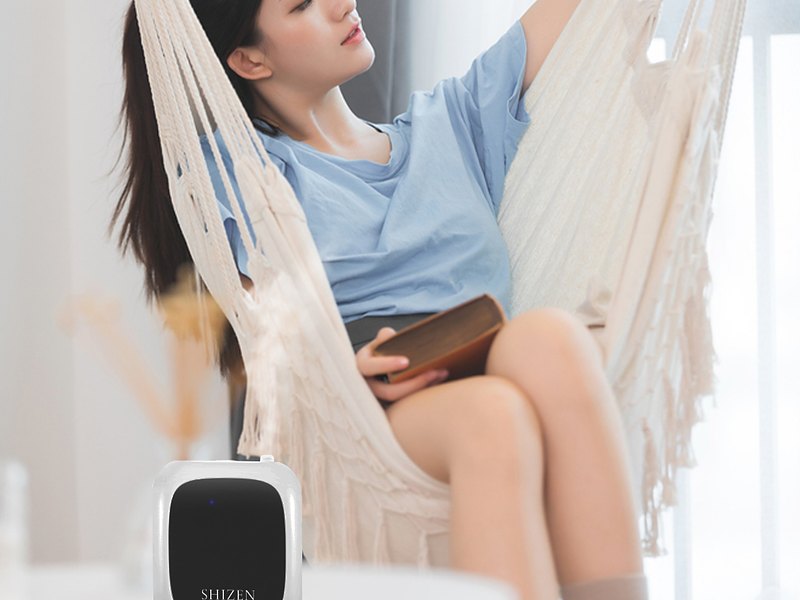
A Shizen SBX1 in a reading room with trees outside the window. A view of greenery and a scent, the two things this study tested, in one room. Visual: Shizen.
256participants, four groupsview × scent, present or absent
2.5 → 3.6words recalled, control vs scent onlymemory test, p = 0.007
−38.8%dishonest reporting with scent aloneincentivised task, p < 0.001
A team at Texas A&M University asked a plain question: when a room gets a view of greenery, a nature scent, or both, what changes in how people work? They split 256 university students into four groups and had them work through six incentivised tasks in a fixed order: a mental-arithmetic stress test, a letter search for attention, a word list for memory, matrix puzzles for reasoning, a lottery choice for risk, and a reporting task in which cheating paid.1 The scent was a commercial fragrance called “Walk in the Woods”, bergamot on top, amber, woods and musk underneath, diffused at about 2 parts per million. The authors say so plainly: a nature-associated stimulus, not a forest.1
Scent and memory
The scent group recalled 3.6 words; the control group 2.5.
Memory moved with scent. Recall averaged 2.51 words in the control group and 3.56 in the scent-only group, a difference the authors report at p = 0.007.1 Attention moved with the view: 1.89 against 2.27 on the letter task, p < 0.001.1 The two did not simply add up. Several interactions appeared, on attention, memory, risk and dishonesty, which the authors read as “it depends on the combination” rather than “more nature is always better”.1 Stress scores and risk aversion barely changed in any group.1
Scent and honesty
Cheating fell by 38.8% with scent alone.
The reporting task paid for results that could not be checked, so over-reporting was a measure of dishonesty. Control participants over-reported 2.55 on average; the scent-only group 1.56, which is 38.8% less; the group with both view and scent 1.95, 23.5% less.1 The authors do not claim a mechanism. They note that moral cognition was not measured, and they present the finding as something to test again rather than a rule.1
Scent alone cut dishonest reporting by 38.8% — a result the authors call one to test again, not a rule.
What a careful reader keeps
Students, a laboratory, one scent.
The limits are stated in the paper and worth repeating. The participants were university students, not office workers. The tasks were laboratory tasks, shorter and simpler than real work. The scent was one commercial fragrance, not the air of a forest. And the effects are small to moderate in size, the kind that shows up across 256 people but may not show up in any one person.1 What the study adds to the two we wrote about earlier, which tired people are helped by which scent, and why a scent only works if the person likes it, is a third piece: a low, nature-associated scent, with no view at all, changed memory and honesty in a controlled room.
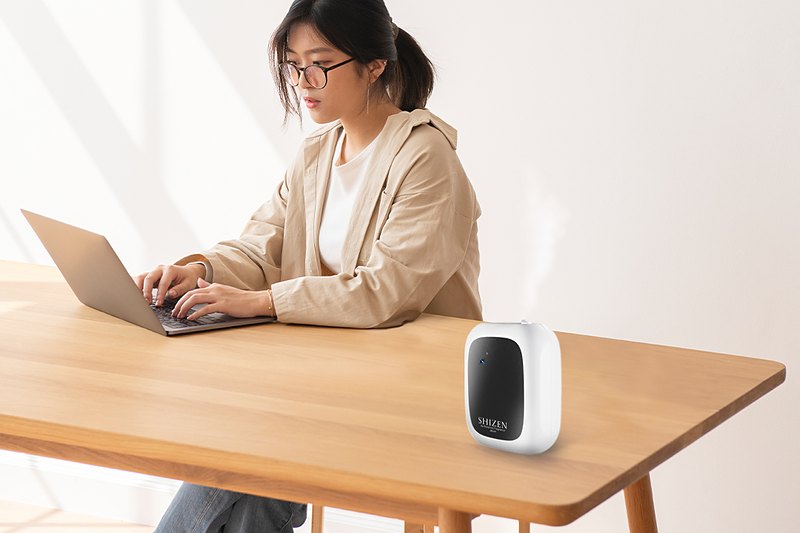
A Shizen SBX1 on a work table. The reporting task in the study is ordinary desk work: figures someone reports that nobody checks. Visual: Shizen.For offices in Indonesia
Where recall and honesty matter.
The rooms this speaks to are specific: meeting rooms where decisions are taken, training and examination rooms, receptions and reading rooms where people must remember what they were told, and any desk where someone reports numbers that nobody checks. The study’s 2 parts per million is a scent you barely notice, which is also how Shizen schedules a room, by the hour and at low intensity. And the interactions are a reminder to test a view of plants and a scent together in your own room rather than assume they add up.
What it means for your space
For offices, meeting rooms and training rooms in Indonesia.
1
Put the scent where people remember and decide.
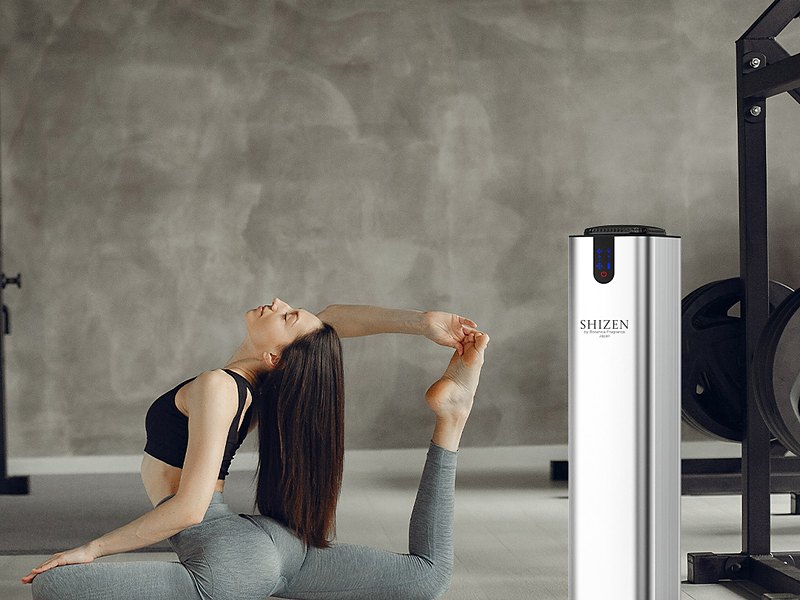
Meeting rooms, training rooms, receptions and reading rooms first. An SBX1 covers a meeting room; an SBA1 through the air conditioning covers a training floor. Keep the same scent in those rooms so that it becomes part of how the room feels, not an event.
2
Keep it faint.
The study worked at about 2 parts per million, a level most people do not consciously notice. Shizen units are scheduled by the hour and set to low intensity for exactly this reason: the aim is a room that feels right, not a room that smells of something.
3
Test a view and a scent together, in your room.
The study’s interactions mean plants, windows and scent do not simply add up. Try two or three Shizen scents in the room as it is, with its plants and its light, during the free site survey, and keep the one the people who use the room prefer.
How Shizen does it
A Japanese brand, rented monthly.
Shizen is a Japanese brand — by Botanica Fragrance Japan — with more than 100 fragrances, including a series inspired by five-star hotels. The system is rented monthly: machine, installation, fragrance oil, regular servicing and unit replacement included, minimum contract 12 months. A free site survey, no commitment.
Plan prices as of September 2026. All six plans, up to 2,000 m², are on the home page.
Sources and notes
Where these figures come from.
Frontiers in Psychology, 17:1872507, published 13 July 2026 (online 22 June 2026), “An experimental study of the acute effects of visual and olfactory nature stimuli on task performance”, Sarayu Chandra Mouli, Marco Palma, Suma Katabattuni and Jay E. Maddock, Texas A&M University; open access. All figures in this article (sample, conditions, scent, task means, p values, effect sizes, limitations) are taken from the paper.
Shizen is not affiliated with the companies, media or researchers named in this article; they are cited as sources.
The effect of a scent on a space depends on the room, the intensity and the fragrance chosen. That is why we always start with a site survey and a trial of two or three scents.
Aroma alam: ingatan lebih tajam, kecurangan turun 38,8%.
Tempatkan 256 orang di sebuah ruangan, beri sebagian pemandangan hijau, sebagian aroma hutan yang tipis, sebagian keduanya, lalu amati enam tugas berhadiah. Itu yang dilakukan tim Texas A&M. Pemandangan mempertajam perhatian. Aroma, sendirian, memperbaiki ingatan dan menurunkan kecurangan 38,8%. Para penulisnya hati-hati membaca artinya; kami juga.
Ditulis oleh tim ShizenSumber: Frontiers in Psychology, 13 Juli 2026 (Texas A&M University)Semua artikel InsightTerjemahan Bahasa Indonesia oleh tim Shizen dari artikel asli berbahasa Inggris.
Shizen SBX1 di sebuah ruang baca dengan pepohonan di luar jendela. Pemandangan hijau dan aroma, dua hal yang diuji studi ini, dalam satu ruangan. Visual: Shizen.
256peserta, empat kelompokpemandangan × aroma, ada atau tidak
2,5 → 3,6kata yang diingat, kontrol vs aroma sajates ingatan, p = 0,007
−38,8%pelaporan tidak jujur dengan aroma sajatugas berhadiah, p < 0,001
Tim di Texas A&M University mengajukan pertanyaan sederhana: kalau sebuah ruangan diberi pemandangan hijau, aroma alam, atau keduanya, apa yang berubah pada cara orang bekerja? Mereka membagi 256 mahasiswa ke empat kelompok dan meminta mereka mengerjakan enam tugas berhadiah dalam urutan tetap: tes stres hitung mental, pencarian huruf untuk perhatian, daftar kata untuk ingatan, teka-teki matriks untuk penalaran, pilihan lotre untuk risiko, dan tugas pelaporan yang memberi imbalan bagi yang curang.1 Aromanya adalah wewangian komersial bernama “Walk in the Woods”, bergamot di atas, amber, kayu dan musk di bawah, disebarkan pada kadar sekitar 2 bagian per juta. Para penulis menulisnya terang-terangan: ini rangsangan yang mengingatkan pada alam, bukan hutan.1
Aroma dan ingatan
Kelompok aroma mengingat 3,6 kata; kelompok kontrol 2,5.
Yang menggerakkan ingatan adalah aroma. Rata-rata kata yang diingat 2,51 di kelompok kontrol dan 3,56 di kelompok aroma saja, selisih yang dilaporkan pada p = 0,007.1 Yang menggerakkan perhatian adalah pemandangan: 1,89 berbanding 2,27 pada tugas huruf, p < 0,001.1 Keduanya tidak sekadar dijumlahkan. Muncul beberapa interaksi, pada perhatian, ingatan, risiko dan kejujuran, yang dibaca para penulis sebagai “tergantung kombinasinya”, bukan “makin banyak alam makin baik”.1 Skor stres dan sikap terhadap risiko nyaris tidak berubah di kelompok mana pun.1
Aroma dan kejujuran
Kecurangan turun 38,8% dengan aroma saja.
Tugas pelaporan memberi imbalan untuk hasil yang tidak bisa diperiksa, sehingga pelaporan berlebih menjadi ukuran ketidakjujuran. Peserta kontrol melaporkan berlebih rata-rata 2,55; kelompok aroma saja 1,56, yaitu 38,8% lebih rendah; kelompok dengan pemandangan dan aroma 1,95, 23,5% lebih rendah.1 Para penulis tidak mengklaim mekanismenya. Mereka mencatat bahwa kognisi moral tidak diukur, dan menyajikan temuan ini sebagai sesuatu yang perlu diuji lagi, bukan aturan.1
Aroma saja menurunkan pelaporan tidak jujur 38,8% — hasil yang oleh penulisnya disebut perlu diuji lagi, bukan aturan.
Yang perlu diingat pembaca yang cermat
Mahasiswa, laboratorium, satu aroma.
Batasannya ditulis di makalahnya dan patut diulang. Pesertanya mahasiswa, bukan pekerja kantor. Tugasnya tugas laboratorium, lebih pendek dan sederhana daripada pekerjaan sungguhan. Aromanya satu wewangian komersial, bukan udara hutan. Dan efeknya kecil sampai sedang, jenis efek yang terlihat pada 256 orang tetapi belum tentu terlihat pada satu orang.1 Yang ditambahkan studi ini pada dua tulisan kami sebelumnya, lelah yang mana dibantu aroma yang mana, dan kenapa aroma hanya bekerja kalau orangnya suka, adalah keping ketiga: aroma tipis yang mengingatkan pada alam, tanpa pemandangan apa pun, mengubah ingatan dan kejujuran di sebuah ruangan terkendali.
Shizen SBX1 di meja kerja. Tugas pelaporan dalam studi itu adalah pekerjaan meja biasa: angka yang dilaporkan seseorang dan tidak diperiksa siapa pun. Visual: Shizen.Untuk kantor di Indonesia
Di tempat ingatan dan kejujuran penting.
Ruang yang disasar studi ini spesifik: ruang rapat tempat keputusan diambil, ruang pelatihan dan ujian, resepsionis dan ruang baca tempat orang harus mengingat apa yang disampaikan, dan meja mana pun tempat seseorang melaporkan angka yang tidak diperiksa siapa pun. Kadar 2 bagian per juta dalam studi itu adalah aroma yang nyaris tidak disadari, dan begitu pula cara Shizen menjadwalkan sebuah ruang: per jam, pada intensitas rendah. Interaksinya pun pengingat: uji tanaman, jendela dan aroma bersama-sama di ruang Anda sendiri, jangan dianggap otomatis saling menambah.
Apa artinya untuk ruang Anda
Untuk kantor, ruang rapat dan ruang pelatihan di Indonesia.
1
Letakkan aroma di tempat orang mengingat dan memutuskan.
Ruang rapat, ruang pelatihan, resepsionis dan ruang baca lebih dulu. SBX1 mencakup ruang rapat; SBA1 lewat AC sentral mencakup lantai pelatihan. Pertahankan aroma yang sama di ruang-ruang itu supaya ia menjadi bagian dari rasa ruangan, bukan sebuah peristiwa.
2
Pertahankan tipis.
Studi itu bekerja pada sekitar 2 bagian per juta, kadar yang tidak disadari kebanyakan orang. Unit Shizen dijadwalkan per jam dan diatur pada intensitas rendah justru karena ini: tujuannya ruang yang terasa pas, bukan ruang yang berbau sesuatu.
3
Uji pemandangan dan aroma bersama-sama, di ruang Anda.
Interaksi dalam studi itu berarti tanaman, jendela dan aroma tidak sekadar saling menambah. Coba dua atau tiga aroma Shizen di ruang apa adanya, dengan tanaman dan cahayanya, saat survei gratis, lalu pertahankan yang disukai orang-orang yang memakai ruang itu.
Bagaimana Shizen mengerjakannya
Merek Jepang, disewa bulanan.
Shizen adalah merek Jepang — by Botanica Fragrance Japan — dengan lebih dari 100 aroma, termasuk seri yang terinspirasi hotel bintang lima. Sistemnya disewa bulanan: mesin, instalasi, fragrance oil, perawatan berkala dan penggantian unit termasuk, kontrak minimum 12 bulan. Survei ruang gratis, tanpa komitmen.
Harga paket per September 2026. Enam paket lengkap, sampai 2.000 m², ada di halaman utama.
Sumber dan catatan
Dari mana angka-angka ini.
Frontiers in Psychology, 17:1872507, terbit 13 Juli 2026 (daring 22 Juni 2026), “An experimental study of the acute effects of visual and olfactory nature stimuli on task performance”, Sarayu Chandra Mouli, Marco Palma, Suma Katabattuni dan Jay E. Maddock, Texas A&M University; akses terbuka. Semua angka dalam artikel ini (sampel, kondisi, aroma, rata-rata tugas, nilai p, ukuran efek, batasan) diambil dari makalah itu.
Shizen tidak berafiliasi dengan perusahaan, media atau peneliti yang disebut di artikel ini; mereka disebut sebagai sumber.
Efek aroma pada suasana ruang bergantung pada ruang, intensitas dan aroma yang dipilih. Karena itu kami selalu mulai dengan survei ruang dan uji dua–tiga aroma.