許可と証明書。オイルはインドネシア保健省(Kemenkes)の流通許可とIFRA証明書を取得しているか。写しを送ってもらえるか。室内用の芳香剤はPKRT(家庭用衛生用品)に分類され、流通許可が必要です。許可番号は「KEMENKES RI PKD」または「PKL」に数字が続く形式で、infoalkes.kemkes.go.idで照会できます。3 IFRA規格は、科学的な評価に基づいて、香料原料の使用禁止や制限を定めたものです。4
Journal of Consumer Research, 22巻2号、229〜238ページ、1995年。“There’s Something in the Air: Effects of Congruent or Incongruent Ambient Odor on Consumer Decision Making”、Deborah J. Mitchell、Barbara E. Kahn、Susan C. Knasko。商品カテゴリーに合った香りのもとでは、参加者は情報の処理により多くの時間をかけ、選択肢をより総合的に比べた。
Journal of Retailing, 93巻2号、228〜240ページ、2017年。“Calibrating 30 Years of Experimental Research: A Meta-Analysis of the Atmospheric Effects of Music, Scent, and Color”、Holger Roschk、Sandra Maria Correia Loureiro、Jan Breitsohl。66件の研究、135の効果量、参加者計15,621人。
Cara memilih vendor pengharum ruangan untuk bisnis Anda.
Showroom, show unit, hotel, kantor, bar dan klub, kafe, klinik: tujuh jenis ruang, tujuh cara aroma bekerja. Panduan ini merangkum apa yang berbeda di masing-masing, dan apa yang patut ditanyakan ke vendor mana pun sebelum tanda tangan — termasuk ke kami.
Ditulis oleh tim ShizenPanduan dari tim Shizen; riset dan regulasi yang dikutip ada di bagian akhirSemua artikel InsightDitulis dalam Bahasa Indonesia oleh tim Shizen. Tersedia juga dalam bahasa Inggris dan Jepang.
Shizen SBX1 di samping bonsai, di sebuah show unit hunian di Tangerang. Foto: Shizen.
7jenis bisnistujuh ruang, tujuh kebutuhan
8pertanyaan untuk vendorsebelum menandatangani kontrak
66studi dalam satu meta-analisisruang beraroma dinilai lebih menyenangkan
Dari luar, semua vendor pengharum ruangan terlihat sama: ada mesin, ada katalog aroma, ada jadwal isi ulang. Bedanya baru terasa setelah beberapa bulan — ketika aroma di lobi menipis menjelang sore, teknisi sulit dihubungi, atau tamu mulai mengeluh aromanya terlalu menyengat. Pilihan yang tepat juga tidak sama untuk setiap bisnis. Showroom butuh aroma yang menjadi bagian dari merek; show unit butuh kesan rumah dalam lima menit pertama; bar butuh aroma yang tetap terasa di jam paling ramai. Panduan ini merangkum yang kami pelajari dari memasang sistem scenting di lebih dari seratus lokasi di Indonesia.
Sebelum memilih vendor
Mulai dari ruangnya, bukan dari mesinnya.
Vendor yang baik bertanya sebelum menyebut harga. Ada lima hal yang menentukan sistem yang tepat. Pertama, luas lantai dan tinggi plafon: yang diisi aroma adalah volume udara, bukan meter persegi, sehingga lobi berplafon enam meter butuh lebih banyak daripada kantor dengan luas yang sama. Kedua, jenis AC — split per ruang, atau AC sentral dengan ducting. Ketiga, jam ramai dan jam tutup. Keempat, titik yang paling menentukan kesan, biasanya pintu masuk, resepsionis dan lift. Kelima, bau yang perlu diimbangi: kopi, asap, kelembapan, atau bau bahan kimia di ruang perawatan.
Dari situ mesinnya mengikuti. Ruang meeting dan ruang praktik cukup dengan unit meja atau unit dinding. Lobi dan area terbuka memakai unit lantai. Satu lantai penuh atau satu gedung paling rapi dilayani unit HVAC yang disambung ke ducting AC: satu titik, satu aroma, tanpa alat yang terlihat tamu.
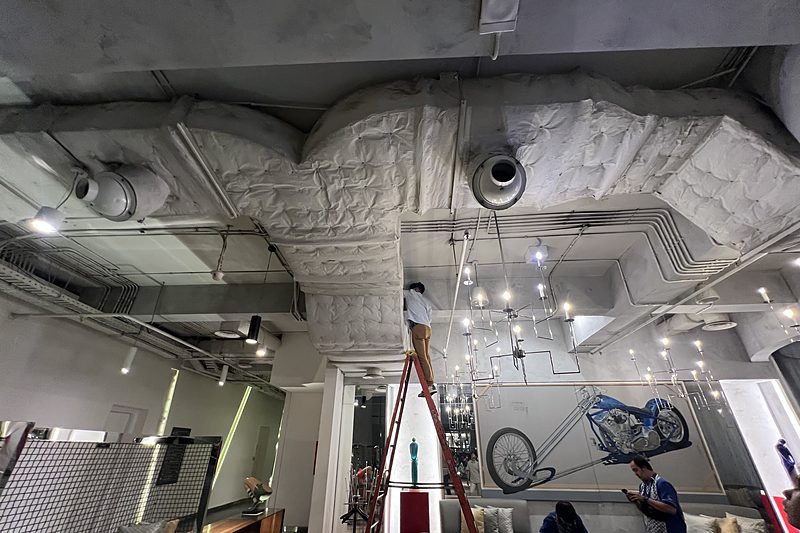
Teknisi Shizen menyambungkan unit HVAC ke ducting AC di lounge sebuah hotel. Setelah selesai, yang tersisa untuk tamu hanya aromanya. Foto: Shizen.
Vendor yang menawarkan satu model untuk semua ruang sedang menjual stok, bukan solusi.
Tujuh jenis bisnis
Yang berbeda di tiap jenis ruang.
Prinsipnya sama di mana pun: aroma yang cocok dengan tempatnya, intensitas yang pas untuk ruangnya, sistem yang dirawat. Yang berubah adalah urutan prioritasnya.
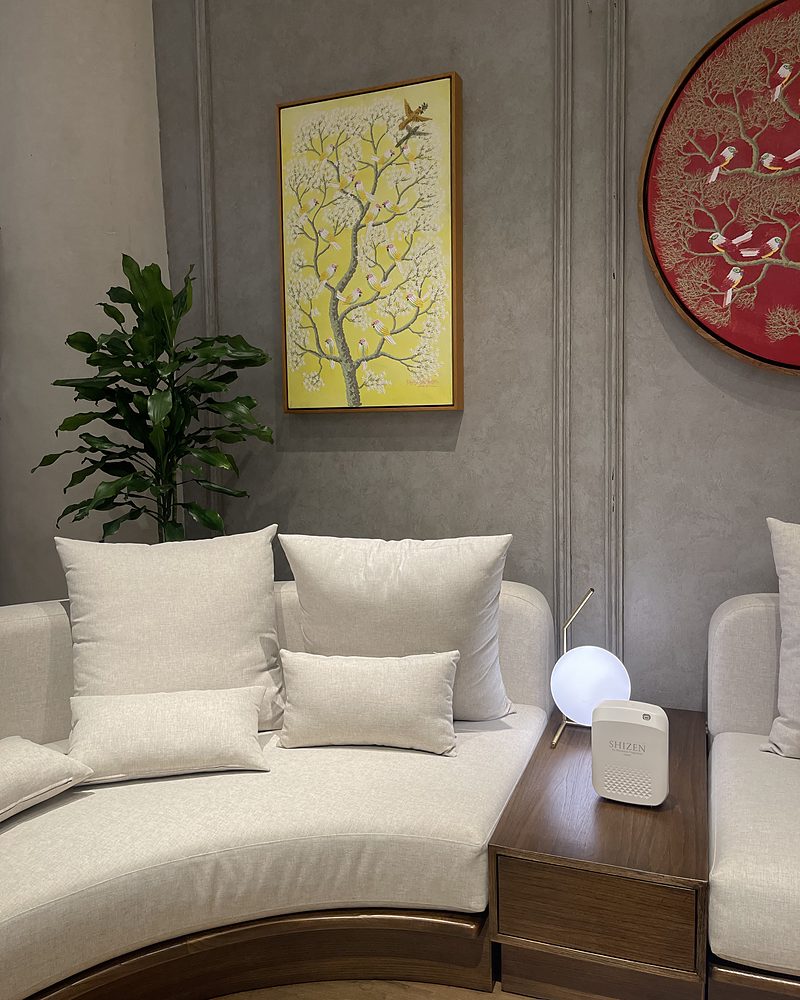
Unit meja Shizen di sebuah showroom furnitur. Foto: Shizen.
Showroom: aroma sebagai bagian dari merek
Di showroom mobil, furnitur, properti atau fesyen, aroma bekerja seperti logo yang tidak terlihat. Pilih satu aroma yang cocok dengan produknya, lalu pakai di semua cabang, supaya pelanggan mengenali tempat Anda sebelum membaca papan namanya. Kecocokan itu bukan soal selera saja: dalam eksperimen yang banyak dikutip, aroma yang sesuai dengan kategori produk membuat orang menimbang pilihan lebih lama dan lebih menyeluruh dibanding aroma yang tidak sesuai.1 Showroom biasanya luas dan berplafon tinggi, jadi tanyakan apakah vendor menghitung dari volume udara dan bisa menyambung ke AC sentral. Untuk furnitur berlapis kain dan butik pakaian, pastikan tidak ada residu yang mengendap di kain.
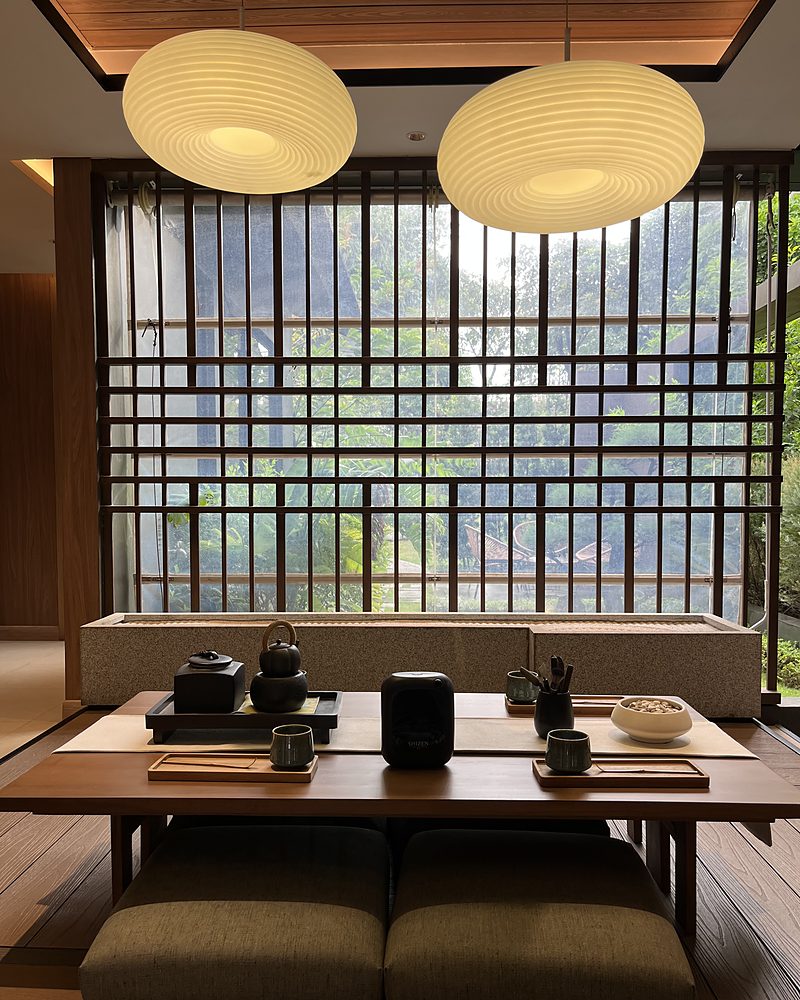
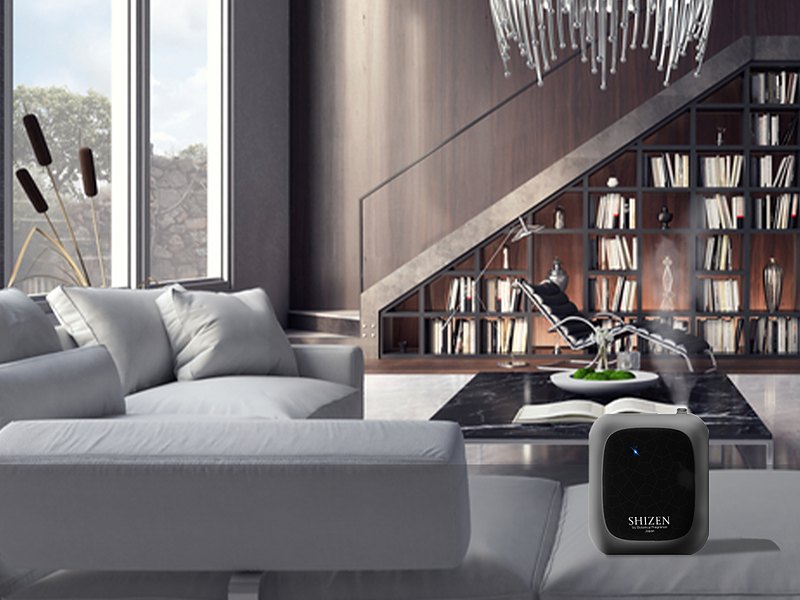
Ruang keluarga bergaya Jepang di show unit yang sama; unit Shizen berdiri di atas meja rendah. Foto: Shizen.
Show unit dan marketing gallery: kesan rumah dalam lima menit
Calon pembeli memutuskan apakah mereka bisa membayangkan tinggal di sana dalam beberapa menit pertama. Aromanya harus terasa seperti rumah yang baru dibersihkan — teh putih, linen, kayu yang ringan — bukan lobi hotel. Intensitasnya rendah dan rata dari jam buka sampai tutup, termasuk di kamar tidur dan kamar mandi contoh yang biasanya dilihat terakhir. Karena show unit sering hanya dibuka selama masa pemasaran, tanyakan bagaimana kontrak vendor mengikuti masa itu, dan apakah ada sewa harian untuk acara peluncuran.
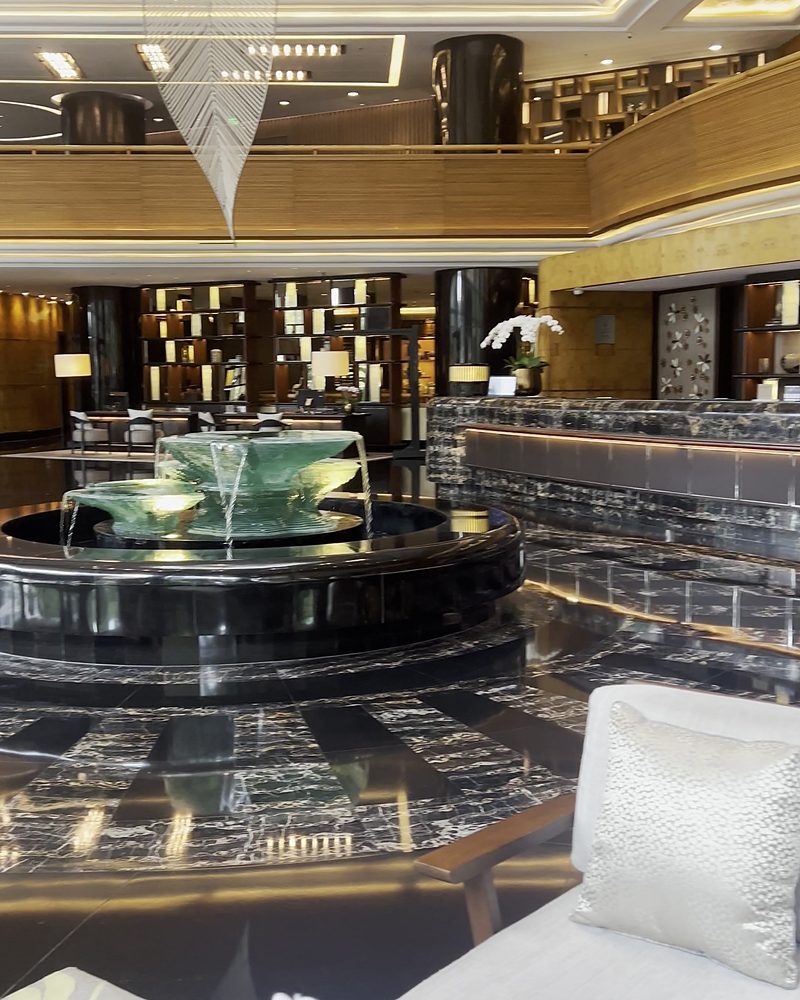
Lobi sebuah hotel klien di Jakarta. Aroma lobi biasanya disebar lewat ducting AC, tanpa alat yang terlihat tamu. Foto: Shizen.
Hotel: satu aroma, setiap hari, di setiap lantai
Hotel memakai satu aroma khas di lobi, lift dan koridor, setiap hari, sampai aroma itu menjadi milik hotel dan tamu yang kembali mengenalinya di langkah pertama. Karena itu yang dicari adalah konsistensi: jadwal 24 jam, intensitas yang sama di setiap lantai, dan sistem yang menyebar lewat ducting AC tanpa alat yang terlihat tamu. Ballroom dan restoran memakai jadwal sendiri — penuh saat acara, hampir hilang saat kosong. Di area spa dan kolam, pastikan sistemnya tidak menambah lembap. Sebelum tanda tangan, tanyakan siapa yang datang mengisi ulang, seberapa sering, dan berapa lama unit pengganti tiba bila ada yang rusak.
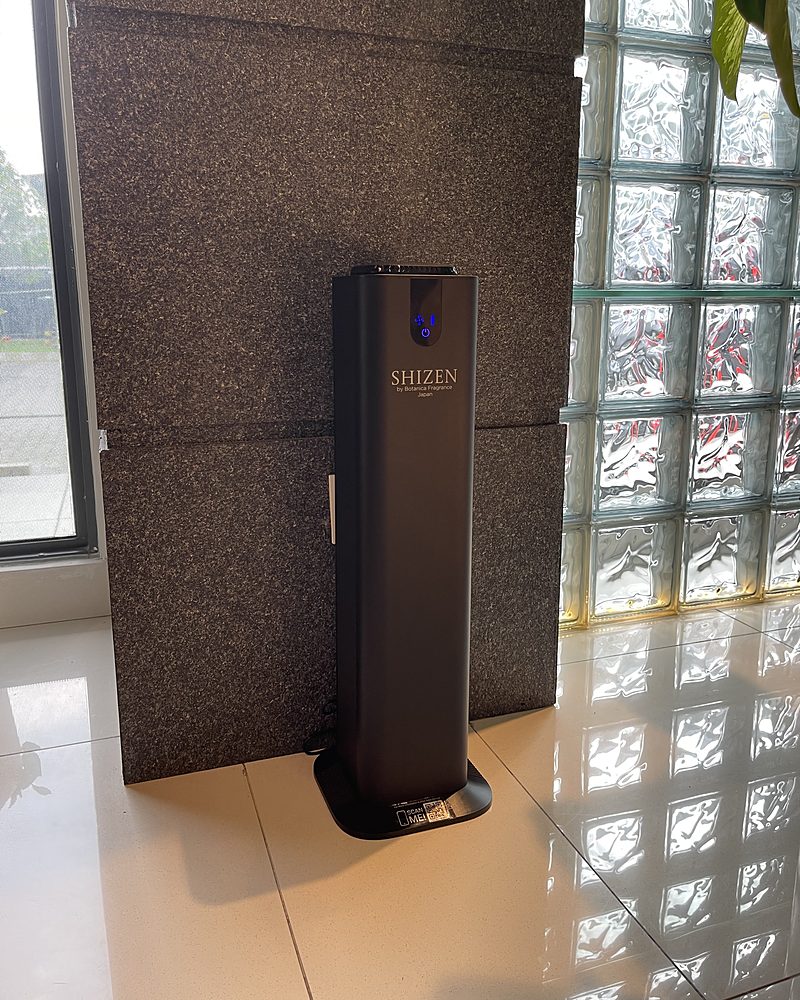
SBA2, unit lantai Shizen, di lobi kantor seorang klien. Foto: Shizen.
Kantor: hadir untuk tamu, ringan untuk karyawan
Di kantor, aroma bekerja diam-diam. Lobi dan ruang tunggu boleh hadir penuh untuk tamu; ruang kerja yang ditempati delapan jam sehari memakai setelan jauh lebih ringan, mengikuti jam kerja, dan mati sendiri di malam hari. Ruang meeting cepat pengap dan cocok untuk unit kecil yang senyap — tanyakan angka desibelnya, dan carilah yang di bawah 35 dB untuk ruang tertutup. Tim GA dan HSE biasanya meminta dokumen: izin edar, sertifikat dan laporan uji oil. Vendor yang serius mengirimkannya tanpa perlu diingatkan.
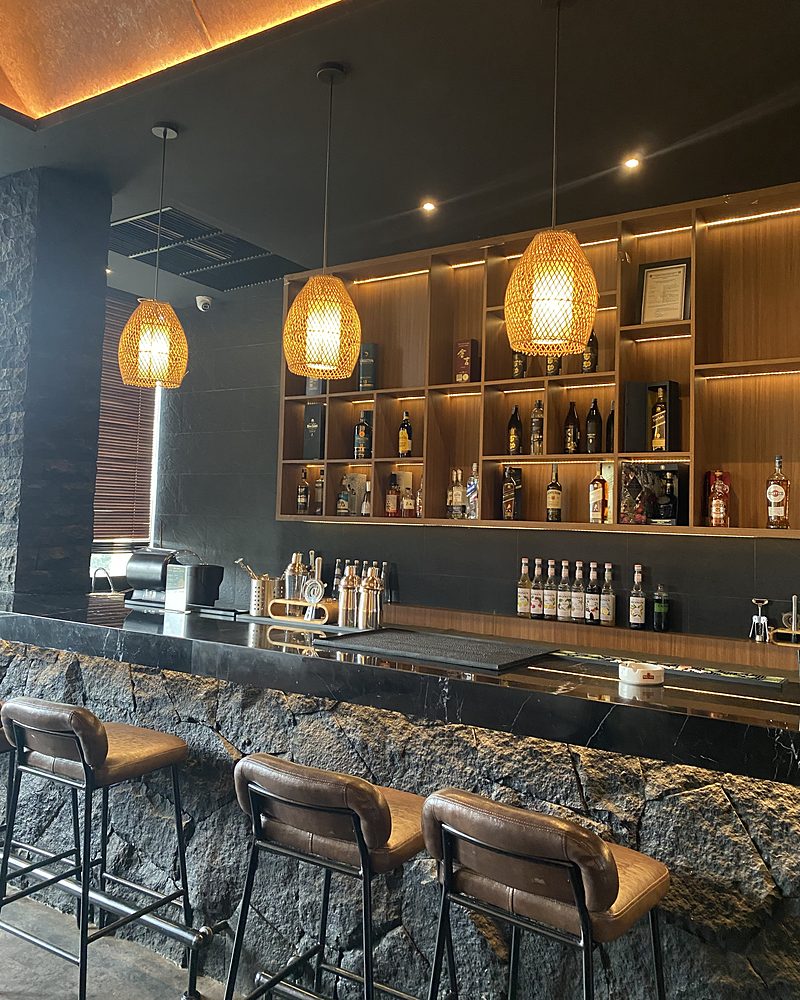
Bar di restoran seorang klien. Foto: Shizen.
Bar dan klub: tegas di jam ramai
Bar dan klub adalah kebalikan kantor: ruangnya gelap, padat, berbau minuman, makanan dan asap, dan jam puncaknya malam hari. Aroma perlu lebih tegas di jam itu dan lebih tenang saat sepi, sehingga jadwal per jam lebih penting daripada pilihan mesinnya. Karakter yang hangat — kayu, amber, rempah — biasanya lebih menyatu dengan interior gelap daripada bunga yang manis. Satu hal perlu dikatakan dengan jujur: pengharum ruangan tidak menggantikan ventilasi. Ia membuat ruang yang sudah berventilasi baik terasa lebih bersih dan lebih berkarakter; ia tidak menghapus bau yang tidak dibuang.
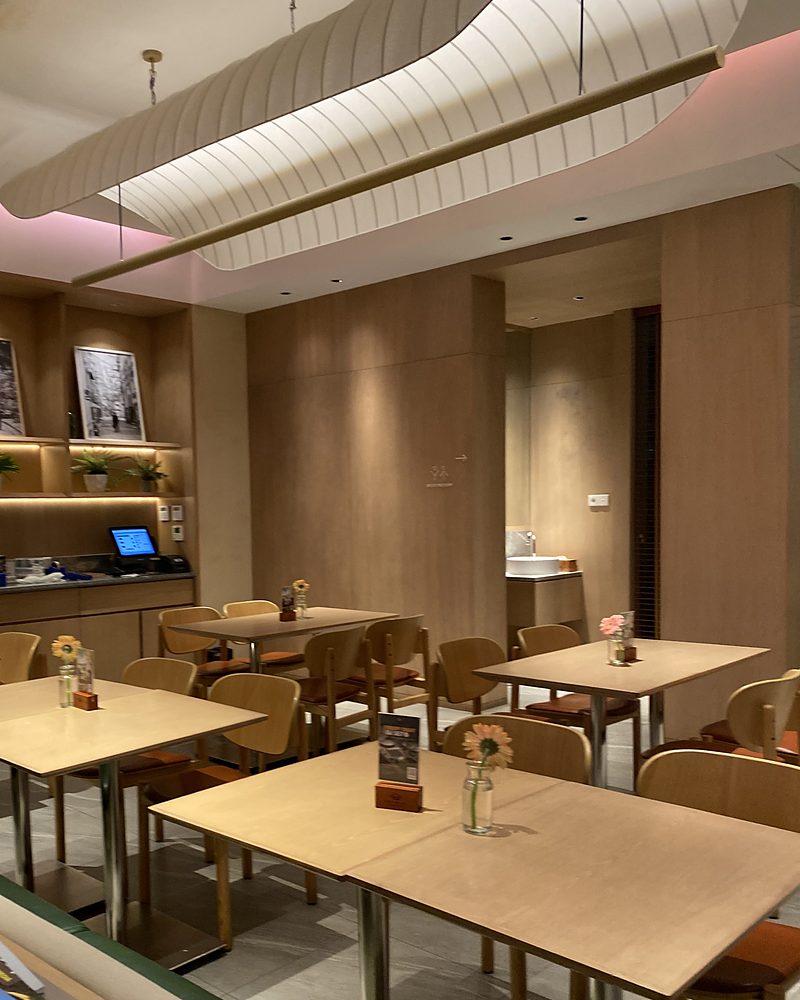
Kafe seorang klien. Foto: Shizen.
Kafe dan restoran: menu tetap yang utama
Di kafe dan restoran, yang harus tercium pertama adalah kopi dan makanannya. Aroma ruang ditempatkan di pintu masuk, area tunggu dan toilet — bukan di atas meja makan — dengan karakter ringan seperti citrus atau teh hijau yang tidak bersaing dengan menu. Intensitasnya rendah di jam makan dan sedikit naik di jam sepi. Bila dapurnya terbuka, minta vendor melihat arah aliran udara dulu: aroma yang terdorong ke arah dapur hanya akan bercampur dengan asap masakan.
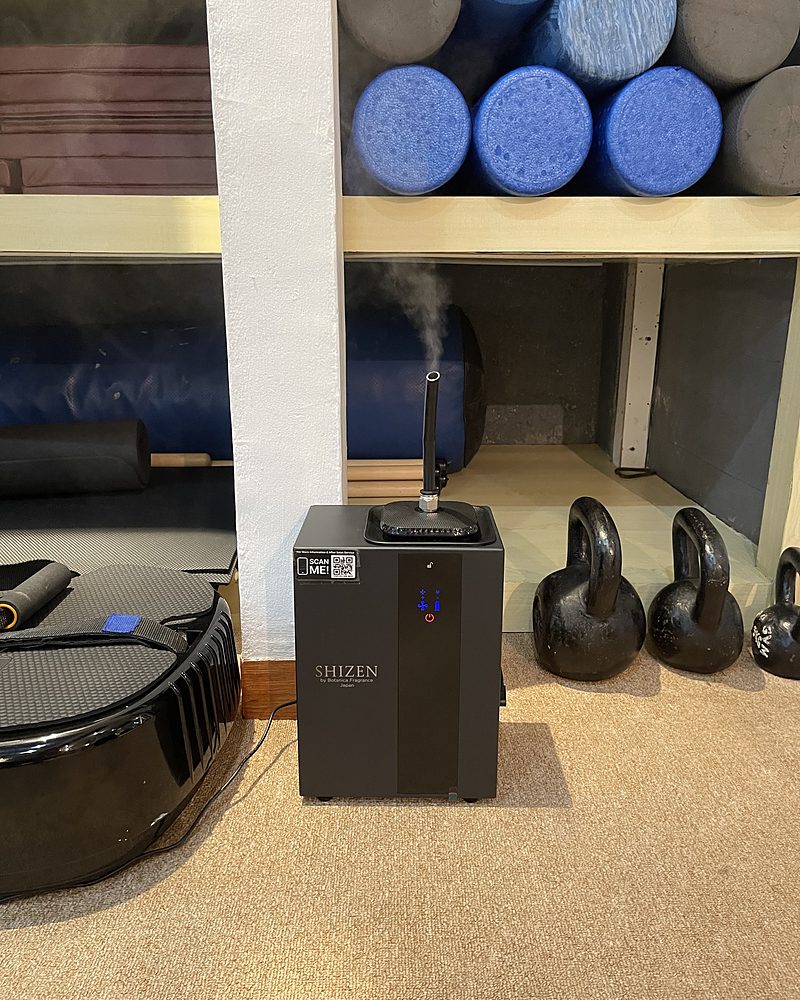
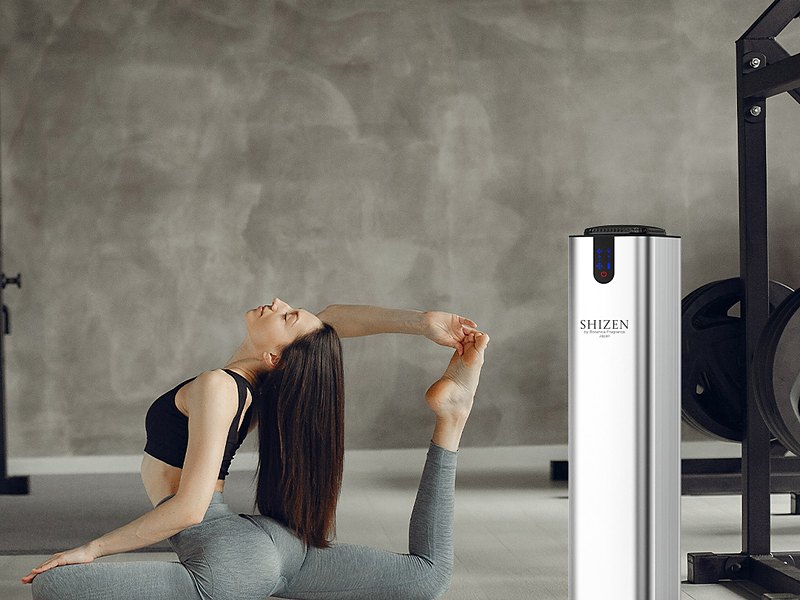
SBA1 di sebuah studio pilates. Kabut keringnya keluar dari satu nozzle; mesin yang sama bisa disambung ke ducting AC untuk satu lantai. Foto: Shizen.
Klinik, spa dan studio: bersih, tenang, terdokumentasi
Klinik kecantikan, klinik gigi, fisioterapi, spa dan studio pilates butuh kesan bersih dan tenang sejak pintu dibuka. Pilih aroma yang lembut dan tidak manis — intensitas rendah di ruang perawatan, sedikit lebih terasa di resepsionis. Tamu datang dengan kepekaan yang berbeda-beda, jadi kemampuan mengatur intensitas per ruang lebih penting daripada pilihan aromanya. Di sini dokumen paling sering diminta: izin edar Kemenkes dan sertifikat IFRA oil-nya. Dan waspadai klaim kesehatan dari vendor mana pun — pengharum ruangan bukan obat.
Delapan pertanyaan
Tanyakan ini ke vendor mana pun — termasuk ke kami.
Izin dan sertifikat. Apakah oil-nya punya izin edar Kemenkes dan sertifikat IFRA, dan bisakah salinannya dikirim? Pengharum ruangan termasuk Perbekalan Kesehatan Rumah Tangga (PKRT) yang wajib berizin edar; nomornya berformat KEMENKES RI PKD atau PKL diikuti angka, dan bisa dicek di infoalkes.kemkes.go.id.3 Standar IFRA menetapkan bahan wewangian mana yang dilarang atau dibatasi, berdasarkan kajian ilmiah.4
Isi oil-nya. Tanpa alkohol, tanpa air, tanpa pemanasan? Residu di marmer, kain dan layar biasanya datang dari sini.
Cara menghitung. Mesinnya dipilih dari volume udara ruang Anda, atau dari stok yang ada?
Suara. Berapa desibel di ruang kerja, ruang meeting dan kamar?
Isi biaya bulanan. Apa yang termasuk — mesin, isi ulang, servis, penggantian unit — dan apa yang ditagih terpisah?
Uji coba. Boleh dicoba dulu di ruang sendiri, bukan di showroom vendor?
Referensi. Siapa klien mereka di sektor Anda, dan boleh dihubungi?
Asal aromanya. Formulasi sendiri, atau oil OEM dari pabrik mesin yang juga dijual ke vendor lain?
Jawaban Shizen untuk kedelapannya ada di halaman vendor pengharum ruangan. Vendor yang baik tidak keberatan ditanya.
Tanda bahaya
Lima tanda vendor yang sebaiknya dilewati.
Menyebut harga sebelum melihat ruang atau menanyakan sistem AC.
Tidak bisa menunjukkan izin edar, sertifikat atau laporan uji oil-nya.
Menjual mesin tanpa rencana isi ulang dan servis, atau menagih setiap kunjungan secara terpisah.
Menjanjikan aroma yang “menghilangkan semua bau”, atau manfaat kesehatan.
Meminta kontrak panjang tanpa uji coba dan tanpa kejelasan soal penggantian unit.
Kenapa memilih dengan serius
Aroma ruang bukan dekorasi.
Riset tentang suasana ruang sudah berjalan lebih dari tiga puluh tahun. Sebuah meta-analisis atas 66 studi dengan lebih dari 15.000 partisipan menyimpulkan bahwa ruang yang diberi aroma atau musik dinilai lebih menyenangkan dan lebih memuaskan, dan pengunjungnya lebih berniat datang lagi atau membeli — dengan efek yang cenderung lebih besar di bisnis jasa seperti hotel, restoran dan klinik daripada di ritel.2 Tetapi efek itu datang dari pilihan yang tepat: aroma yang cocok dengan tempatnya, intensitas yang pas untuk ruangnya, dan sistem yang dirawat setiap bulan. Ketiganya ada di tangan vendor yang Anda pilih.
Apa artinya untuk ruang Anda
Tiga langkah sebelum memilih vendor.
1
Catat ruangnya.
Luas lantai, tinggi plafon, jenis AC, jam buka, dan titik yang paling sering dilewati tamu. Dengan lima data itu, rekomendasi dari vendor yang berbeda bisa dibandingkan secara adil.
2
Cium di ruang sendiri.
Minta dua atau tiga aroma dicoba di lokasi Anda, dengan cahaya, material dan jam ramainya — bukan di showroom vendor, karena karakter aroma berubah mengikuti ruang. Shizen melakukannya saat survei gratis; untuk area 200 m² ke atas, mesin dipasang dan dicoba gratis selama 7 hari.
3
Bandingkan biaya per bulan, bukan harga mesin.
Jumlahkan mesin, oil isi ulang, servis dan penggantian unit selama masa kontrak. Paket sewa Shizen menggabungkan semuanya dalam satu angka per bulan, mulai Rp 597.000, dengan kontrak minimum 12 bulan.
Bagaimana Shizen mengerjakannya
Merek Jepang, disewa bulanan.
Shizen adalah merek Jepang — by Botanica Fragrance Japan — dengan lebih dari 100 aroma, termasuk seri yang terinspirasi hotel bintang lima. Sistemnya disewa bulanan: mesin, instalasi, fragrance oil, perawatan berkala dan penggantian unit termasuk, kontrak minimum 12 bulan. Survei ruang gratis, tanpa komitmen.
Harga paket per September 2026. Enam paket lengkap, sampai 2.000 m², ada di halaman utama.
Sumber dan catatan
Dari mana angka-angka ini.
Journal of Consumer Research, 22(2): 229–238, 1995, “There’s Something in the Air: Effects of Congruent or Incongruent Ambient Odor on Consumer Decision Making”, Deborah J. Mitchell, Barbara E. Kahn dan Susan C. Knasko. Peserta yang mencium aroma yang sesuai dengan kategori produk menghabiskan lebih banyak waktu memproses informasi dan menimbang pilihan secara lebih menyeluruh.
Journal of Retailing, 93(2): 228–240, 2017, “Calibrating 30 Years of Experimental Research: A Meta-Analysis of the Atmospheric Effects of Music, Scent, and Color”, Holger Roschk, Sandra Maria Correia Loureiro dan Jan Breitsohl; 66 studi, 135 efek, 15.621 partisipan.
International Fragrance Association (IFRA), Standar IFRA: sistem pengaturan mandiri industri wewangian yang melarang, membatasi atau menetapkan spesifikasi bahan berdasarkan kajian ilmiah RIFM dan panel ahli independen; amandemen terbaru adalah yang ke-51.
Shizen tidak berafiliasi dengan perusahaan, media atau peneliti yang disebut di artikel ini; mereka disebut sebagai sumber.
Efek aroma pada suasana ruang bergantung pada ruang, intensitas dan aroma yang dipilih. Karena itu kami selalu mulai dengan survei ruang dan uji dua–tiga aroma.
How to choose a scenting vendor for your business.
Showrooms, show units, hotels, offices, bars and clubs, cafés, clinics: seven kinds of space, seven ways scent has to work. This guide sets out what differs between them, and what to ask any vendor before you sign — including us.
Written by the Shizen teamA guide by the Shizen team; the research and regulations cited are listed at the endAll Insight articlesWritten by the Shizen team; the original is in Bahasa Indonesia, and this English version is written for English readers.
A Shizen SBX1 beside a bonsai in a residential show unit in Tangerang. Photo: Shizen.
7kinds of businessseven spaces, seven needs
8questions for any vendorbefore you sign a contract
66studies in one meta-analysisscented spaces rated more pleasant
From the outside, every scenting vendor looks the same: a machine, a catalogue of fragrances, a refill schedule. The differences show up a few months in — when the lobby scent fades by mid-afternoon, the technician stops answering, or guests start saying it is too strong. The right choice also depends on the business. A showroom needs a scent that becomes part of the brand; a show unit needs to feel like home within five minutes; a bar needs a scent that still holds at its busiest hour. This guide sets out what we have learned installing scenting systems in more than a hundred locations across Indonesia.
Before you choose
Start with the space, not the machine.
A good vendor asks questions before quoting a price. Five things decide the right system. Floor area and ceiling height, because what you are filling is a volume of air, not a number of square metres: a lobby with a six-metre ceiling needs more than an office with the same footprint. The air conditioning — split units room by room, or central air with ducting. Opening hours and peak hours. The points that shape a first impression, usually the entrance, the reception desk and the lifts. And the smells to balance: coffee, smoke, humidity, or the chemical notes of a treatment room.
The machine follows from that. Meeting rooms and consulting rooms need a desktop or wall unit. Lobbies and open areas take a floor-standing unit. A whole floor or a whole building is best served by an HVAC unit connected to the air-conditioning ducts: one point, one scent, nothing for guests to see.
A Shizen technician connecting an HVAC unit to the air-conditioning ducts in a hotel lounge. Once it is done, all that is left for guests is the scent. Photo: Shizen.
A vendor who offers one model for every room is selling stock, not a solution.
Seven kinds of business
What changes from one space to the next.
The principles hold everywhere: a scent that fits the place, an intensity that suits the room, a system that is looked after. What changes is the order of priorities.
A Shizen desktop unit in a furniture showroom. Photo: Shizen.
Showrooms: scent as part of the brand
In a car, furniture, property or fashion showroom, scent works like a logo nobody sees. Choose one fragrance that suits what you sell and use it in every branch, so customers know where they are before they read the sign. Fit is not only a matter of taste: in a widely cited experiment, a scent that matched the product category made people spend longer on a decision and weigh it more completely than a scent that did not.1 Showrooms tend to be large and high-ceilinged, so ask whether the vendor sizes the system by air volume and can connect to central air. With upholstered furniture and clothing, make sure nothing settles on the fabric.
A Japanese-style living room in the same show unit, with a Shizen unit on the low table. Photo: Shizen.
Show units and marketing galleries: home, within five minutes
A buyer decides in the first few minutes whether they can picture living there. The scent should feel like a freshly cleaned home — white tea, linen, light woods — not a hotel lobby. Keep it low and even from opening to closing, including the sample bedrooms and bathrooms people usually see last. Show units often open only for a marketing period, so ask how the vendor’s contract fits that period, and whether there is day rental for the launch event.
The lobby of a client hotel in Jakarta. Lobby scent usually travels through the air-conditioning ducts, with nothing in sight. Photo: Shizen.
Hotels: one scent, every day, on every floor
Hotels use one signature scent in the lobby, lifts and corridors, every day, until it belongs to the hotel and returning guests recognise it at the door. What matters, then, is consistency: a 24-hour schedule, the same intensity on every floor, and a system that travels through the air-conditioning ducts with nothing in sight. Ballrooms and restaurants run their own schedules — full during events, almost off when empty. Around spas and pools, make sure the system adds no humidity. Before you sign, ask who comes to refill, how often, and how quickly a replacement unit arrives if one fails.
An SBA2, Shizen’s floor-standing unit, in a client’s office lobby. Photo: Shizen.
Offices: present for guests, light for staff
In an office, scent should work quietly. The lobby and waiting area can carry it fully for visitors; a floor where people sit for eight hours needs a far lighter setting, timed to working hours and off at night. Meeting rooms turn stuffy quickly and suit a small, quiet unit: ask for the decibel figure, and look for under 35 dB in closed rooms. Facilities and HSE teams will ask for paperwork — registration, certificates and test reports for the oil. A serious vendor sends them without being asked twice.
The bar of a client’s restaurant. Photo: Shizen.
Bars and clubs: firm at the busiest hour
Bars and clubs are the opposite of offices: dark, crowded, carrying drink, food and smoke, with the peak at night. The scent needs to be firmer then and calmer when it is quiet, so the hourly schedule matters more than the machine. Warm characters — wood, amber, spice — usually sit better with a dark interior than sweet florals. One thing should be said plainly: scenting does not replace ventilation. It makes a well-ventilated room feel cleaner and more distinctive; it does not erase smells that are not being extracted.
A client’s café. Photo: Shizen.
Cafés and restaurants: the menu comes first
In a café or restaurant, the first thing guests should smell is the coffee and the food. Room scent belongs at the entrance, the waiting area and the restrooms, not over the tables, with a light character such as citrus or green tea that does not compete with the menu. Keep it low at mealtimes and slightly higher in quiet hours. If the kitchen is open, ask the vendor to look at the airflow first: scent pushed towards the kitchen only mixes with cooking smoke.
An SBA1 in a pilates studio. The dry mist leaves through a single nozzle; the same machine can be connected to the air-conditioning ducts to serve a whole floor. Photo: Shizen.
Clinics, spas and studios: clean, calm, documented
Aesthetic and dental clinics, physiotherapy, spas and pilates studios need to feel clean and calm from the door. Choose a soft, unsweetened fragrance — low in treatment rooms, a little more present at reception. Visitors arrive with different sensitivities, so being able to set the intensity room by room matters more than the fragrance itself. This is also where paperwork is asked for most: the Ministry of Health registration and the oil’s IFRA certificate. And be wary of health claims from any vendor — a room fragrance is not a medicine.
Eight questions
Ask any vendor these — including us.
Registration and certificates. Is the oil registered with Indonesia’s Ministry of Health and IFRA-certified, and can they send copies? Room fragrances are classed as household health supplies (PKRT) and need a distribution licence; the number reads KEMENKES RI PKD or PKL followed by digits and can be checked at infoalkes.kemkes.go.id.3 The IFRA Standards set out which fragrance materials are banned or restricted, based on scientific assessment.4
What is in the oil. No alcohol, no water, no heating? Residue on marble, fabric and screens usually starts here.
How they size it. Is the machine chosen from the air volume of your space, or from what is in stock?
Noise. How many decibels in workspaces, meeting rooms and bedrooms?
What the monthly fee covers. Machine, refills, servicing, replacement units — and what is billed separately?
A trial. Can you try it in your own space, not in their showroom?
References. Who are their clients in your sector, and may you call them?
Where the fragrance comes from. Their own formulation, or OEM oil from the machine factory, sold to other vendors too?
Shizen’s answers to all eight are on our scenting vendor page. A good vendor does not mind being asked.
Red flags
Five signs to walk away.
A price before anyone has seen the space or asked about the air conditioning.
No registration, certificates or test reports for the oil.
A machine sold without a refill and service plan, or every visit billed separately.
Promises that the scent will “remove every smell”, or health benefits.
A long contract with no trial and no clarity on replacement units.
Why it deserves the care
Room scent is not decoration.
Research on the atmosphere of spaces goes back more than thirty years. A meta-analysis of 66 studies with more than 15,000 participants found that spaces with scent or music are rated more pleasant and more satisfying, and that visitors report stronger intentions to come back or buy — with effects that tend to be larger in services such as hotels, restaurants and clinics than in retail.2 But those effects come from getting it right: a scent that fits the place, an intensity that suits the room, and a system that is maintained every month. All three are in the hands of the vendor you choose.
What it means for your space
Three steps before you choose a vendor.
1
Write down the space.
Floor area, ceiling height, type of air conditioning, opening hours and the points guests pass most. With those five, recommendations from different vendors can be compared fairly.
2
Smell it in your own room.
Ask for two or three fragrances to be tried on site, in your light, your materials and your busy hours — not in the vendor’s showroom, because a scent changes with the room. Shizen does this during the free site survey; for areas of 200 m² and above, the machine is installed and tried free for 7 days.
3
Compare the monthly cost, not the machine price.
Add up the machine, refills, servicing and replacements over the contract. Shizen’s rental plans put all of it into one monthly figure, from Rp 597,000, with a 12-month minimum.
How Shizen does it
A Japanese brand, rented monthly.
Shizen is a Japanese brand — by Botanica Fragrance Japan — with more than 100 fragrances, including a series inspired by five-star hotels. The system is rented monthly: machine, installation, fragrance oil, regular servicing and unit replacement included, minimum contract 12 months. A free site survey, no commitment.
Plan prices as of September 2026. All six plans, up to 2,000 m², are on the home page.
Sources and notes
Where these figures come from.
Journal of Consumer Research, 22(2): 229–238, 1995, “There’s Something in the Air: Effects of Congruent or Incongruent Ambient Odor on Consumer Decision Making”, Deborah J. Mitchell, Barbara E. Kahn and Susan C. Knasko. Participants exposed to a scent that matched the product category spent more time processing the information and weighed their choices more holistically.
Journal of Retailing, 93(2): 228–240, 2017, “Calibrating 30 Years of Experimental Research: A Meta-Analysis of the Atmospheric Effects of Music, Scent, and Color”, Holger Roschk, Sandra Maria Correia Loureiro and Jan Breitsohl; 66 studies, 135 effects, 15,621 participants.
International Fragrance Association (IFRA), the IFRA Standards: the fragrance industry’s self-regulation system, which bans, restricts or sets specifications for materials on the basis of RIFM’s scientific assessment and an independent expert panel; the current index is the 51st Amendment.
Shizen is not affiliated with the companies, media or researchers named in this article; they are cited as sources.
The effect of a scent on a space depends on the room, the intensity and the fragrance chosen. That is why we always start with a site survey and a trial of two or three scents.